Commotion at Como
Como was a lusty mining camp in the closing days of the Civil War and despite the fact that it was reached by a twisting mountain road it was the county seat and center of activity of Lyon County.
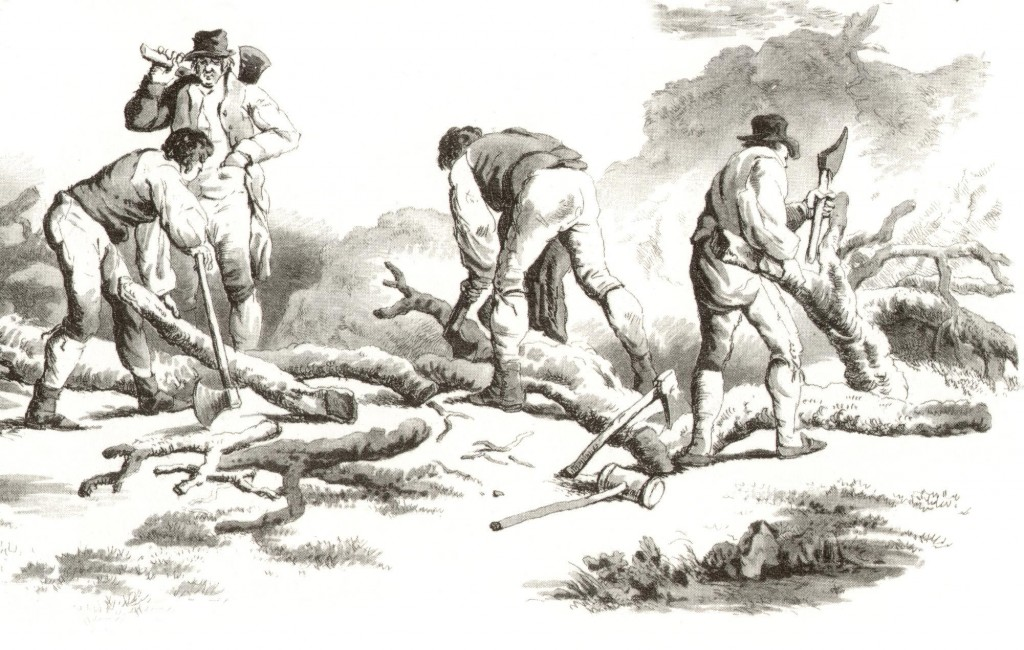
Mining operations necessitated the cutting of numerous pines which covered the hillsides, and the logging operations reached such proportions that Paiute Chief Numaga approached the mine owners and asked them to stop cutting down the trees since they were depriving the Indians of essential foodstuff. He explained that the Paiutes gathered pine nuts each fall as one of their staple crops,
Disregarding Numaga’s request the tree cutting proceeded at an even more rapid rate, but there was tension in the air since the woodcutters were well aware of the Paiutes’ feelings. One day as a number of loggers were returning to Como they saw a group of Indians observing them. Perhaps it was their guilty consciences that prompted them to flee to their house. Word spread in Como that the Paiutes were on the warpath and a message was sent to Fort Churchill requesting troops. Meanwhile a camp password was devised and residents prepared to stand off an attack.
Quite unaware of all the commotion two miners, coming up the road from Dayton after dark, were fired upon when they failed to give the password. Hearing the shots an over-anxious Como resident piled out of his cabin to help defend the town and in his rush tripped and discharged his gun. Moments later the entire male population poured volley after volley down the canyon where the two cowering miners took shelter behind a huge boulder.
By dawn the soldiers and miners had nearly exhausted their ammunition, and since there was no sign of life, they prepared to venture from the town to count the dead Indians. Much to their chagrin Chief Numaga sauntered into the camp to inquire about all the shooting during the night. He said his village had been disturbed and his warriors had been caused a great deal of unnecessary worry.
This was in a series of reprints of ads run by Harold's Club decades ago featuring tales of early Nevada, and printed in Nevada No.3, 1976
Como History
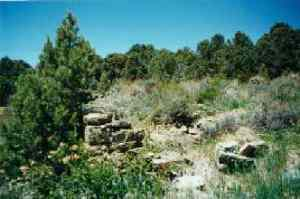
Discovery of gold in the Pine Nut Mountains of western Nevada lead to a mild rush after June, 1860, which lead to the establishment of a district that was called Palmyra. By autumn of 1860, a few merchants set up to provide services to about 100 miners living and working in the district. In 1861, Palmyra gained a post office and improved merchant services. New discoveries a short distance away lead to the platting of Como townsite and Palmyra waned.
Tunnels were opened and a small mill was built by J.D. Winters. It proved to be unsuccessful and Winters later drifted to Virginia City and became an employee of the Yellow Jacket Mine. Another Como citizen was Alf Doten, who eventually went on to fame on the Comstock. Other ventures in Como ensued and soon stock of the district was peddled on the streets of Virginia City.
The business sector of the camp had all the usual amenities of frontier life. A highlight of town was the Cross Hotel, a first class establishment with a parlor, bar, carpeted rooms, and a meeting hall.
Como had a newspaper, the Como SENTINEL, which was published for all of 13 issues between April 16, 1864 to July 9, 1864 by T.W. Abraham and H.L. Weston (the latter formerly of the Petaluma [CA] JOURNAL. After the last issue of the Como SENTINEL, Abraham and Weston went on to publish the Lyon County SENTINEL at nearby Dayton.
Como's post office operated during two periods, opening originally December 30, 1879 and closing January 3, 1881. During a subsequent revival of the old camp, another post office operated between May 29, 1903 to February 28, 1905. Como remained quiet afterwards.
The town's last inhabitant, 63-year-old Judge G. W. Walton, died in a fire that destroyed his cabin on the night of November 22, 1874. Perhaps the most famous resident of the Como region was Chief Truckee, father of chief Winnemucca, befriended of white men, purported savior of emigrant wagon trains and scout for Kit Carson and John C. Fremont
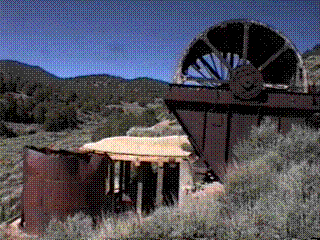
A notable event came during the 1930's when a large mill was built, only to shut down immediately thereafter when it was found there was no ore to work.
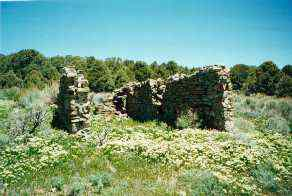
Today Como is totally abandoned and rests only some foundations of the old buildings. In addition to abandoned mines and ghost ruins of the old town, the region also contains Indian caves and petroglyphs.
Sources: NEVADA GHOST TOWNS & MINING CAMPS - Paher, Stanley W. NEVADA POST OFFICES: AN ILLUSTRATED HISTORY - Gamett, James and Paher, Stanley W. THE NEWSPAPERS OF NEVADA: A HISTORY & BIBLIOGRAPHY 1854 - 1979 - Lingenfelter, Richard E. and Gash, Karen Rix David A. Wright Great Basin Research - Ridgecrest, CA
|