Yerington Monday: Open Range
The state of Nevada encompasses more than 70 million acres. As anyone who has driven through Nevada knows, much of the state is wide open and empty. A good deal of this these areas are known as “open range”. The state of Nevada defines “open range” as follows: all unenclosed land outside of cities and towns upon which cattle, sheep or other domestic animals by custom, license, lease or permit are grazed or permitted to roam.
As the official definition indicates, open range has no fences bordering the roadway. Cattle and other animals are free to wander where they will. If this sounds dangerous, it is! The Nevada Department of Transportation indicates that between 1998 and 2002, there were more than 200 accidents each year on Nevada roads because of cattle in the roadway. Sometime there is a sign indicating you are in an open range area, but not always.
As a kid in Nevada there was no speed limit outside of a town’s city limit. My mother never drove less than 80 miles per hour until the 55 speed limit came into effect in the 70’s. The no speed limit was a bad mix with the open range laws. I lost several classmates who hit a cow on the highway. However, driving past herds of cattle and sheep was a wonderful sight. It made me aware of living in a wild and free “don’t fence me in” country.
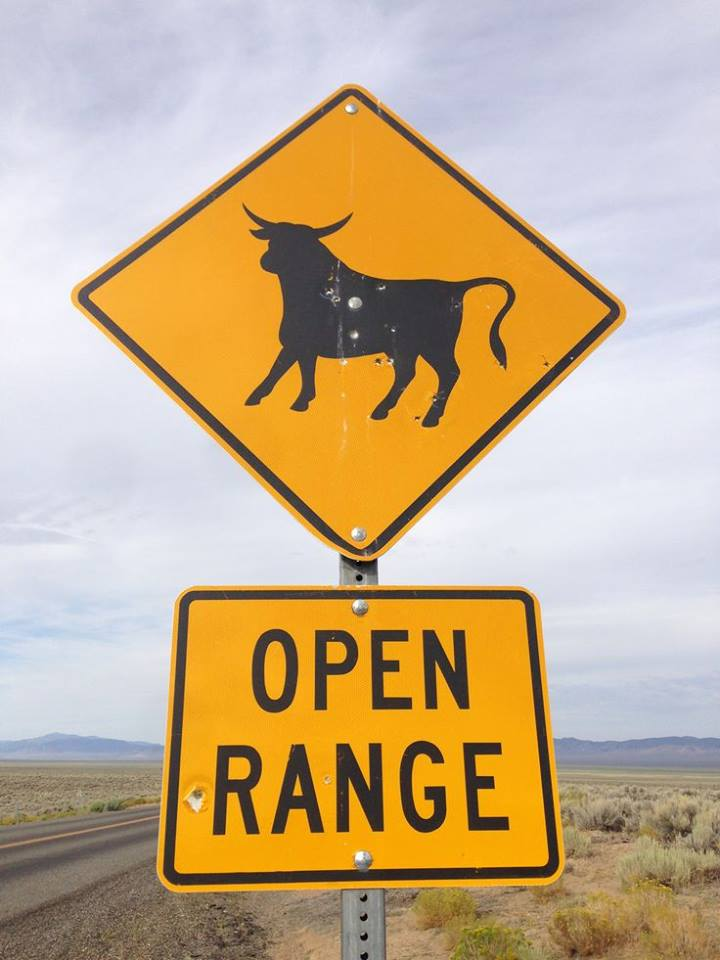
Open Range Sign
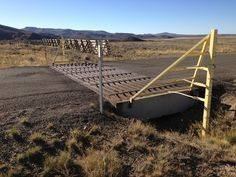
Cattle Guard
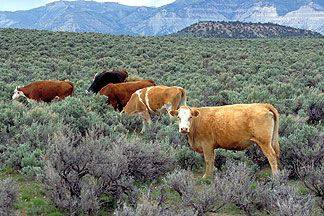
Cattle feeding on Nevada's open range

Wild Horses
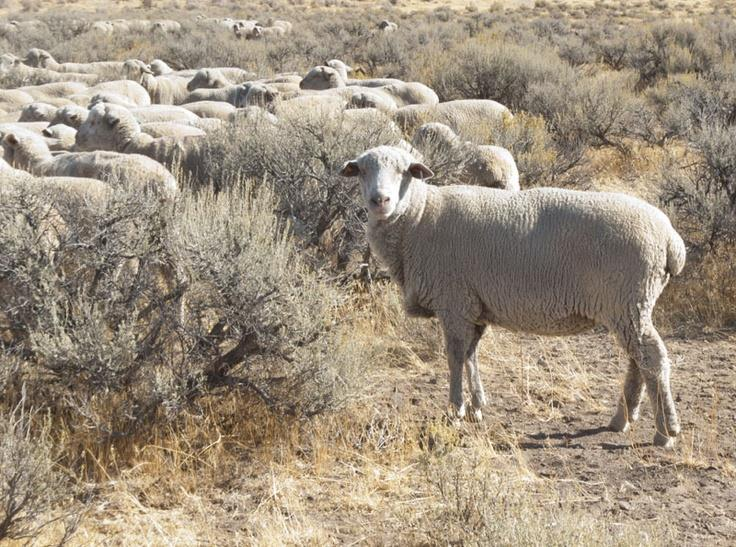
Sheep grazing in open range
Comments
- Peggy Freitas Purintun I love the open range country in Nevada, but you are right about it being a hazard. Keeps you on your toes.
Karen Sue Johnson-Bradshaw My Dad being a water well driller was hired by the blm to drill several water wells with windmills to pump the water for range animals. And I do do remember as a teenager driving no less than 80 as soon as you leave city limits lol.
- Donna Johnson I remember bringing a friend who grew up in the state of New York to Nevada and we were driving and we crossed a "cattle bridge" - scared her to death - when I told her what it was she was in utter shock - what? Love it - only in "open range"
- Timothy McGowan Chere Brown The NDOT has been building right-of-way fences on their highways over the last number of years. Eventually, they will have all the right-of-ways fenced. The most notable highway in this area that is still not fenced for most of its' length is U.S. Hwy 6 between here and Tonopah. Livestock on the highway is a hazard to be sure. Give the BLM time. I'm sure that eventually they will get around to requiring all livestock to wear reflective vests.
- Timothy McGowan Remember here in Nevada after the 55 MPH speed limit was passed? Nevada did not want to issue regular speeding citations that would have been expensive so they instituted a "Waste of Natural Resources" citation that cost a flat $5.00. I think that was in effect up to 70 mph. After that it was a speed violation.
- Timothy McGowan I don't know what manner of demons torment night travelers on rural highways but almost invariably, when another car was coming and it was necessary to dim headlights, there would be a black cow between me and the other car. Almost invariably!
- Liz Merrill Mason I hit a cow on I-5 back in '72. Totaled my '57 Chevy. I loved that car. The part that really ticked me off was that a greyhound bus had reported it over an hour before I hit it. Oh, and the cow had broken through the fence along the freeway. I don't remember seeing any cattle on the roads in NV but I do recall my uncle hitting a deer just outside Gardnerville as we were driving to Reno from Bridgeport to visit another uncle.
- Ruby Hume Larry & I were returning from SoCal about 1: 00 am this morning when there was a cow about 1/3 of the way meandering across the road--good brakes and the fact that we were just talking about the cows saved a smashed car/cow! We were just about 10 minutes from being home.
- Chere Brown I too have hit a deer on the outskirts of Gardnerville back in the 90's. I was taking my daughter, who had broken her leg while visiting with her grandmother in Smith Valley, to Carson City for medical care. It was late at night and just as I approached the city limits a pregnant deer dashed in front of my car. I hit and killed it. I was heart broken as I saw the dead mother deer laying in the road. I was torn between just going on to get my daughter medical attention and reporting it to the police which I knew I was suppose to do. I drove to the police department but no one was there. So went to a payphone and reported it then sped off to Carson emergency room. The weird thing was that my mother who lived in Carson city warned me as I was leaving, "Chere, be careful and watch for deer" I swear that that woman was psyche at times.
- Chere Brown I remember driving on hot days when mirages would appear because of the heat waves coming off the highway. They could really mess with your head. I have seen elephants, human beings, castles and cows only for them to disappear as I got closer. Except occasionally when it was a real cow. Holy smokes!
- Mary Burns Hey ,"Chair" , if you were seeing elephants and castles, and humans in the horizon, it must've been the '60's heeee!!
- Chere Brown No really, Mary, haven't you ever seen a mirage. I would often see them between Wabuska and Fernley. Long before I was made aware of LSD and other hallucinates. Come on, Yerington Monday friends, come to my defense. I'd hate to think I've been crazy all these years.
- Mary Burns NOooooo, CHair, I was just funnin' ya, as I TOO, saw crazy mirages..... I would see slithereeee snakes on the hot highway .. and that was very unsettling , (no snakes existed) and My Dad would drive 90 mi per hr to Vegas , no big deal then,... and DR Mary, would come through WIlson Canyon ,in her Imperial, going at LEAST 90 per... often down the middle of the road at times chuckle
- Timothy McGowan No Chere Brown, you are no crazier than the rest of us. I have seen these mirages too. Can't say I remember seeing any particular images but weird, nonetheless. In the Fall around here some conditions sometimes exist that cause the distant mountains to distort, sometimes appearing as though a hole forms in them thru which one can see the sky. Oh, and Mary Burns I have never used hallucinogens, even back in the 60's. Reality has always been sufficiently strange.
- Liz Merrill Mason Does anyone else remember the herd of horses that used to be out in the hills on the way to Reno? When I. Was a kid I would always look for them every trip. Didn't see them often so it was always a thrill when I did.
- Peggy Freitas Purintun We saw them just this summer between Yerington and Fernley. There is so much that is unique and fun in the state of Nevada and in the experiences of our upbringing.
- Karen Dodd The wild horses still live in the hills between Silver Springs and Fernley and are always amazing and beautiful to view! Their population appears to be increasing even though efforts have been made to relocate them.
- Timothy McGowan Remember when we were in High School and people were allowed to capture and domesticate wild horses for their own unrestricted use. I remember our classmate, Tom Connelly, talking about his family doing this. Doesn't seem like the wild horse herds were a problem before the BLM started 'managing' them.


