Showing posts with label Thompson Smelter. Show all posts

Friday, January 8, 2016

Yerington Monday: Nevada Copper Belt Railroad

Yerington Monday: Nevada Copper Belt Railroad

The Nevada Copper Belt Railroad lived a short, enthusiastic life, 1911 to 1947. Although the tracks are gone today, its footprint lingers. The short line has several elements that make it attractive to rail modelers: Thompson smelter and Wabuska, the mining and rail headquarters town of Mason, dramatic Wilson Canyon, and Ludwig Mine. Along the way are the spur for oil bulk plants, stock holding pens, the wye at Hudson, Nordyke and the West Walker River. If you are alert to the clues, much of the right of way may still be traced today. The Yerington Chamber of Commerce selected the phrase “Cattle Kingdom in the Copper Hills.” Sounds more genuine American West than gypsum and mutton.
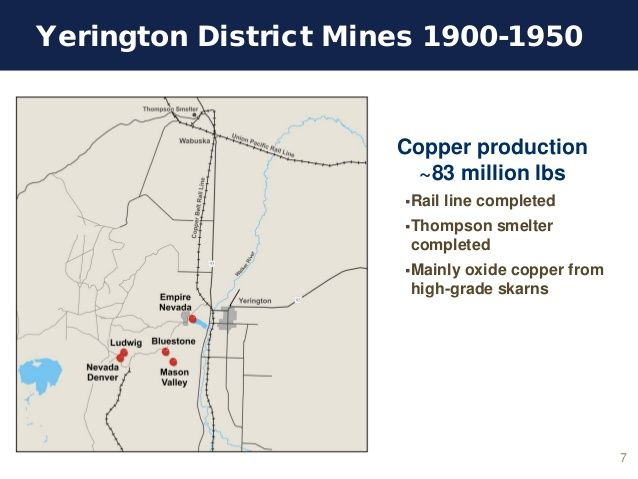


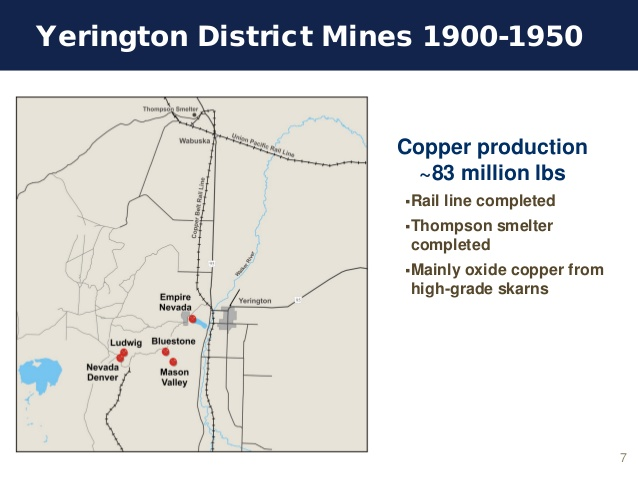
May of Nevada Copper Belt Railroad’s route through the mines and outskirts of Yerington.


The Bluestone Mining Heisler
The Nevada Copper Belt Railroad connected the mines to the smelter at Thompson.
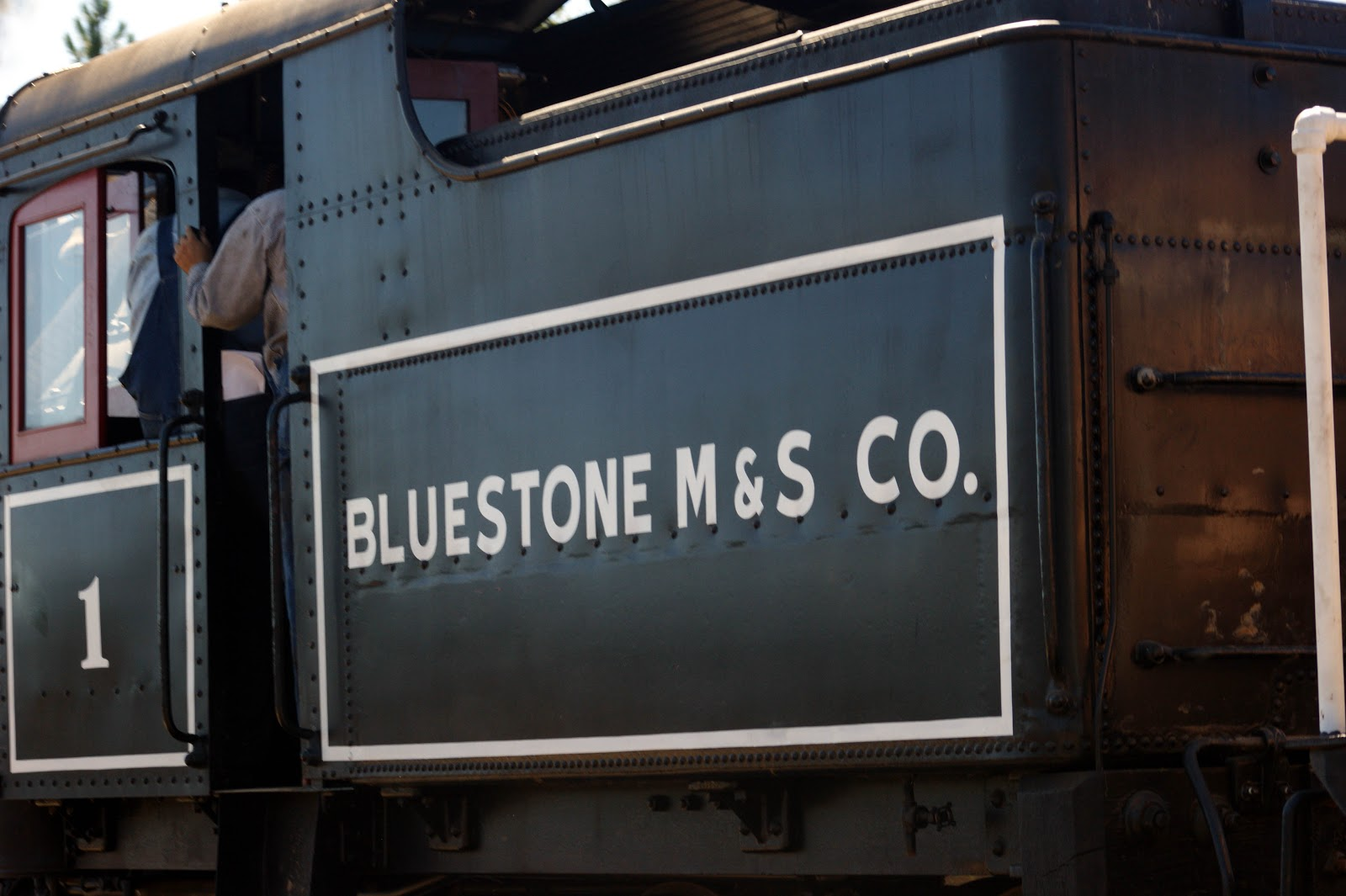


Bluestone Mine, on an uphill spur West of Mason, had its own horsepower to pull the hill.
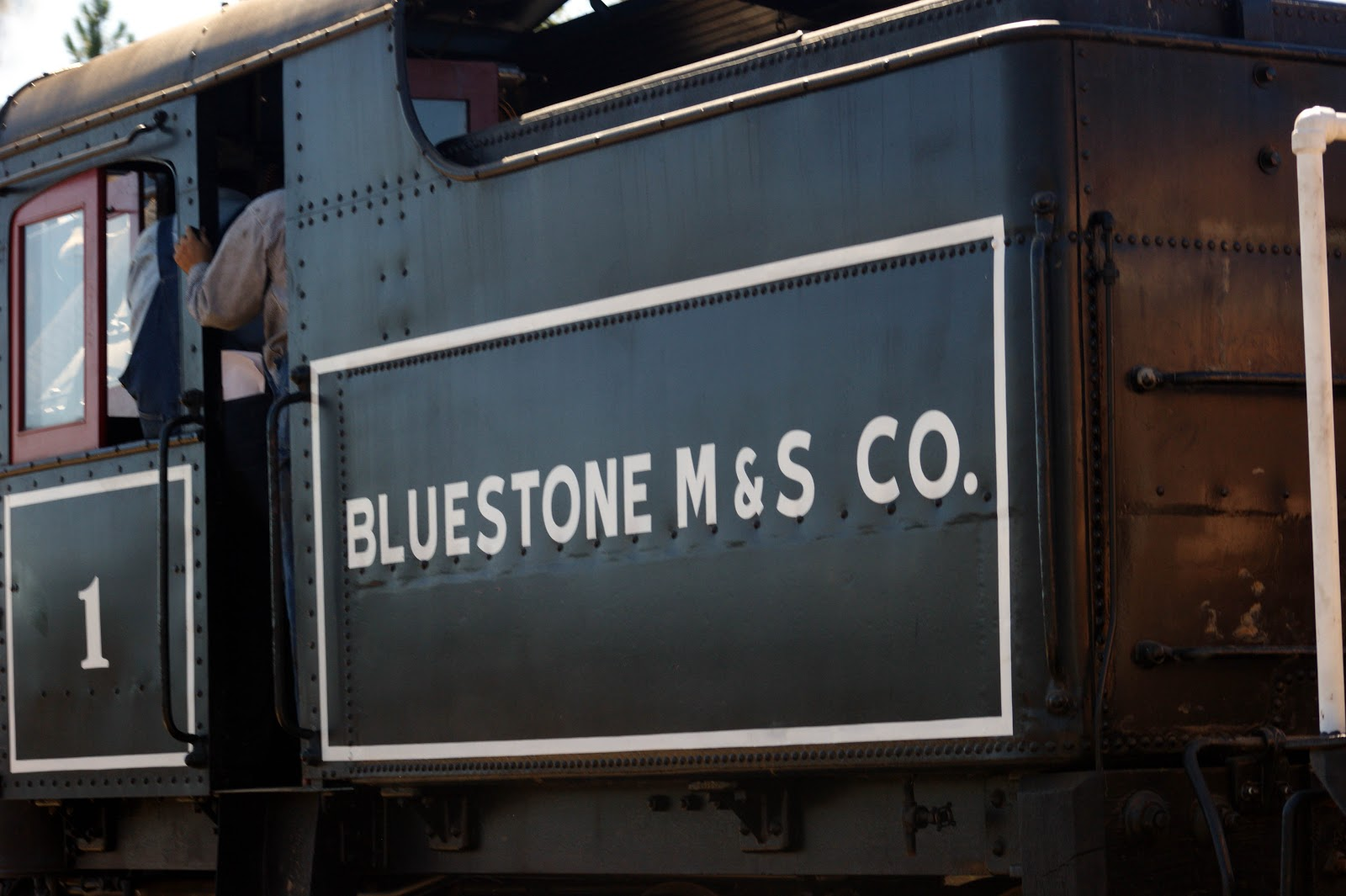
Bluestone Mine, on an uphill spur West of Mason, had its own horsepower to pull the hill. If the Baldwin 2-8-0's on the NCB line where the 'oxen,' then Bluestone's 37 ton Heisler was the 'bulldog' of rails. This is the original loco, but it can't be found at the Bluestone Mine, nor in Mason any more. After some migration, it wound up at Willits California in the Roots of Motive Power museum. On selected occasions, volunteer engineers pull it out, and carry happy passengers in a circle.


Locomotive: Heisler Steam, Bluestone Mining and Smelting


1911 Nevada Copper Belt Railroad Nevada Copper Belt Railroad Wilson Canyon: Nevada Copper, Railroad
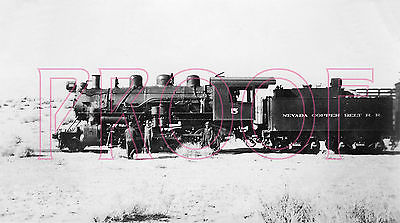

Nevada Copper Belt Railroad Engine 5


Nevada Copper Belt Railroad
The name Fairbanks, Morse & Company of Chicago is synonymous with precision-built platform scales, hand presses, coffee grinders, water tanks, farm machinery, and car wheels. After acquiring the Sheffield Velocipede Car Company of Three Rivers, Michigan, F-M expanded into the burgeoning field of gasoline-engine track cars. Self-propelled passenger cars followed, with the Type 19 open car, the larger Type 23, and, in 1909, the Type 24 with wood carbody by J.G. Brill or G.C. Kuhlman. About 65 four-wheel, 50-horsepower cars had been sold when production ended in 1916.

Nevada Copper Belt Railroad No. 20, a 1909 Model 24 Fairbanks Morse motor car that operated between Mason and Wabuska in Lyon County. (Postcard photo courtesy of Robert Greenwood)

In 1909, the Copper Belt purchased its first gasoline motor car, a Model 24 F-M, for $8,055. As NCB No. 20, this car operated on the relatively flat 23.7 miles between Mason and Wabuska. The 34-foot, 12½-ton car seated 36 passengers. It operated daily until the volume of traffic exceeded its capacity and two larger cars were purchased. Stored in the enginehouse at Mason, No. 20 was destroyed in a disastrous November 1916 fire, along with 1891 Baldwin ten-wheeler No. 1.

Two motor cars built by the Hall-Scott Motor Car Company of West Berkeley, California, came to Nevada. Both were owned by the Copper Belt. Hall-Scott had been building motor cars for two years when the Nevada Copper Belt placed an order for its No. 21. Completed in November 1911 as H-S construction number five, the car had engine, baggage, smoking, and general passenger compartments. The wooden carbody was built by the Holman Car Company of San Francisco to Hall-Scott specifications. J. G. Brill Co. of Philadelphia manufactured the trucks.

Nevada Copper Belt No. 21, built by the Hall-Scott Motor Company of West Berkeley, California, with wood carbody by the Hollman Car Company of San Francisco. (Photo: California State Railroad Museum, courtesy of George Childs)
The car’s six-cylinder Hall-Scott M-6 gasoline engine, with transmission on the rear truck, developed 150 horsepower at 600 rpm. The 54-foot, 36-ton car cost $14,635 f.o.b. Hall-Scott’s shops. It made the 337-mile trip from West Berkeley to Mason largely under its own power. Seating capacity of 69 was figured at three friendly passengers per seat on extra-long car seats, with an 18½-inch center aisle. The car entered revenue service December 1, 1911.

The Orem family of Salt Lake City were major NCB stockholders. Their Salt Lake & Utah Railroad was incorporated in October 1912. Following the success of NCB No. 21, the Orems ordered three new Hall-Scott motor cars that were to be the SL&U’s primary motive power and passenger equipment until the line electrified in July 1914.
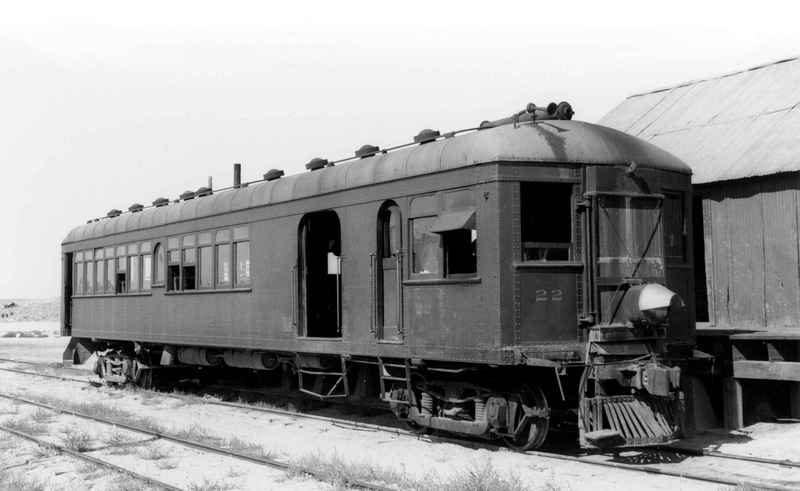
Nevada Copper Belt No. 22, the steel-bodied Hall-Scott motor car that the railroad’s crews preferred to the older, wood-bodied Hall-Scott motor car No. 21, in 1940.

The H-S cars saw consistent use right up to the final years of the NCB. They pulled a boxcar or two over the relatively flat terrain between Wabuska and Mason when traffic and scheduling warranted. Near the short-line’s end in 1947, NCB crews seemed to favor more-modern steel car No. 22. When Bay Area railroad enthusiasts chartered No. 22 for a sentimental photo trip over the line in October 1946, they were offered No. 21 and promptly purchased it. Restored, the car was presented in 1990 to the California State Railroad Museum, where, on occasion, it operates. No. 21 is believed to be the oldest operating passenger motor-car in North America with its original engine.
No. 22 had a less-glamorous end. When scrappers removed its trucks, engine, and seats in 1947, the carbody remained in Nevada, eventually becoming part of a plumbing-and-heating shop in Carson City. It came to the Nevada State Railroad Museum in 1996. NCB No. 22 was the subject of a 2008 restoration feasibility study commissioned by the Museum. Of 23 gasoline motor cars built by Hall-Scott between 1909 and 1921, NCB No. 22 is the only steel-shelled H-S motor car to survive.
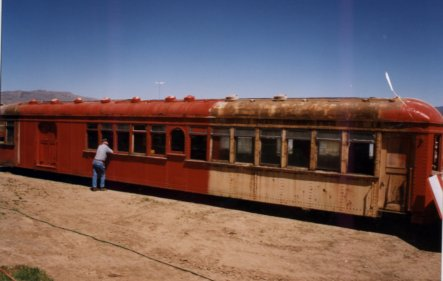
Nevada Copper Belt #22 In the yard awaiting restoration, 2004, Nevada State Railroad Museum collection. Nevada Copper Belt …
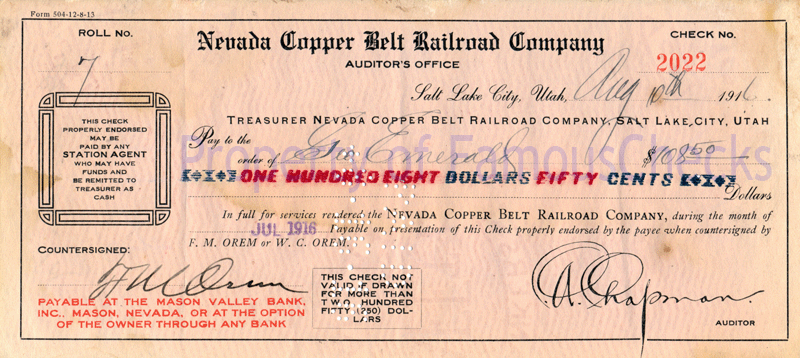
Nevada Copper Belt Railroad check: Nevada Copper Belt Railroad Company
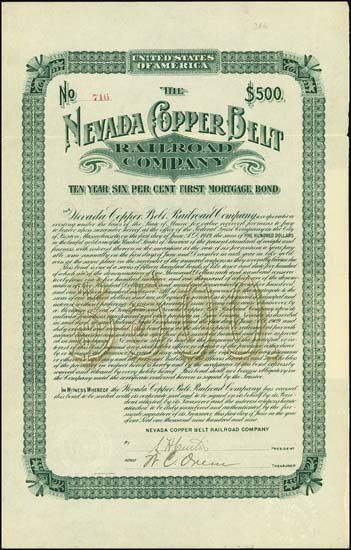
Nevada Copper Belt Railroad 10 year, 6% bond
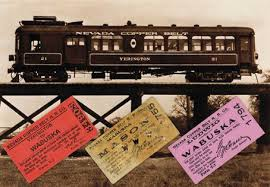
The Nevada Copper Belt Railroad – Hall Scott Motor Car #21. The railroad carried passengers from Wabuska through Yerington, Mason, Wilson Canyon, Hudson and on the Ludwig. The train ran until 1947.
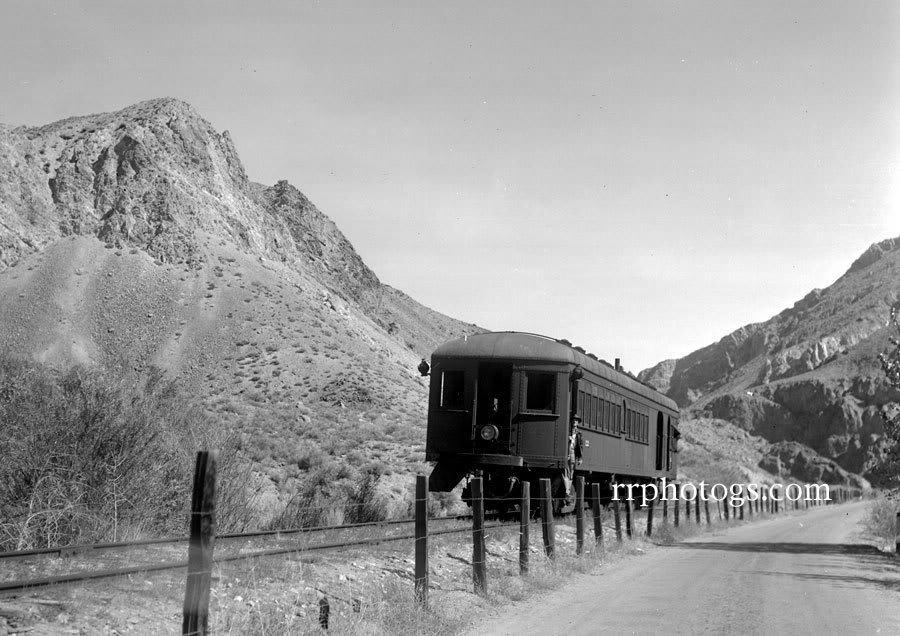
RR PRINT NEVADA COPPER BELT PASSENGER MOTORCAR #22 V3
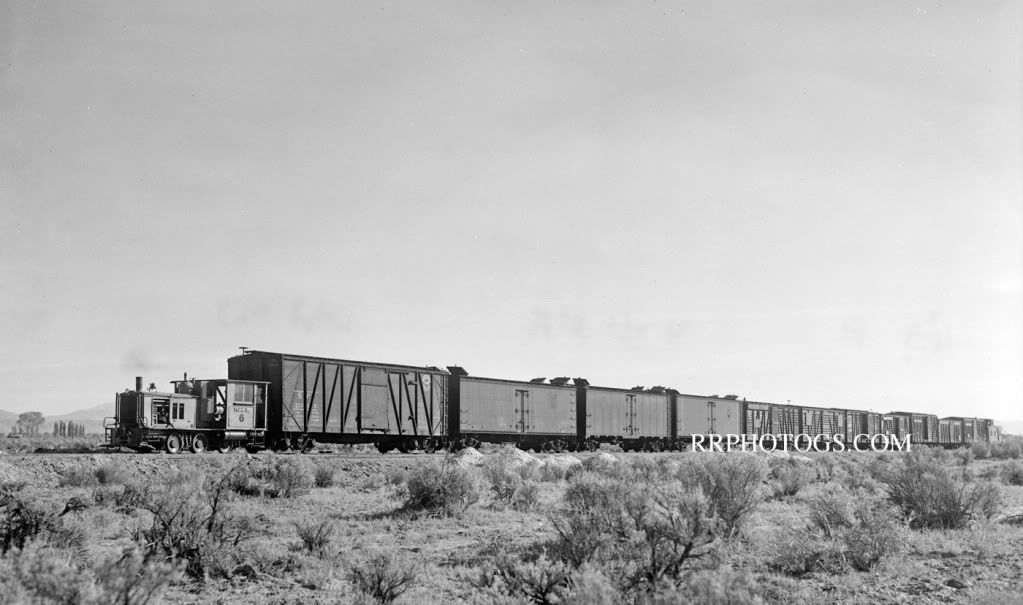
RAILROAD PRINT NEVADA COPPER BELT FREIGHT ACTION w #6
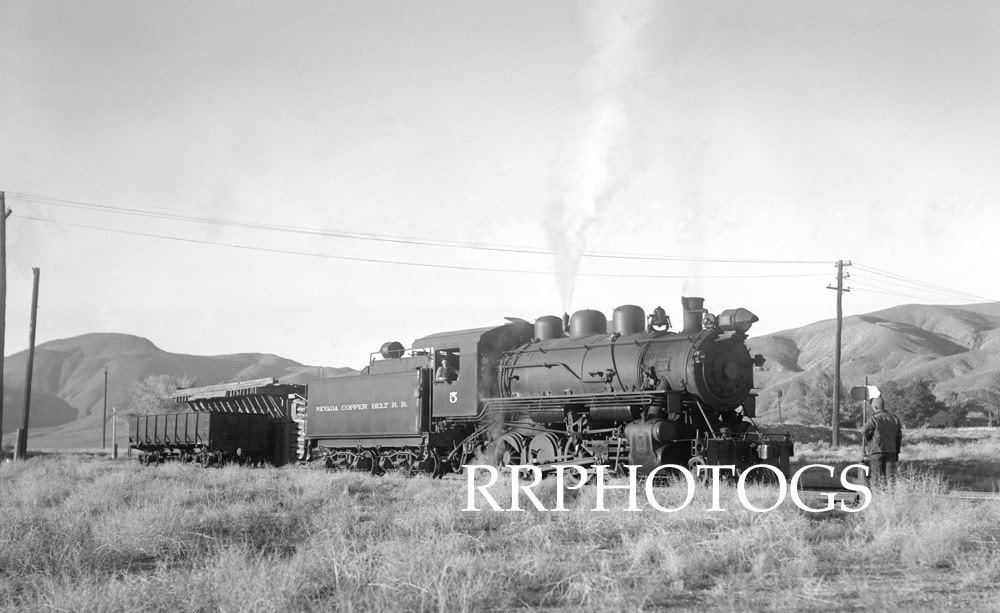
RAILROAD PRINT NEVADA COPPER BELT STEAM ACTION w #5
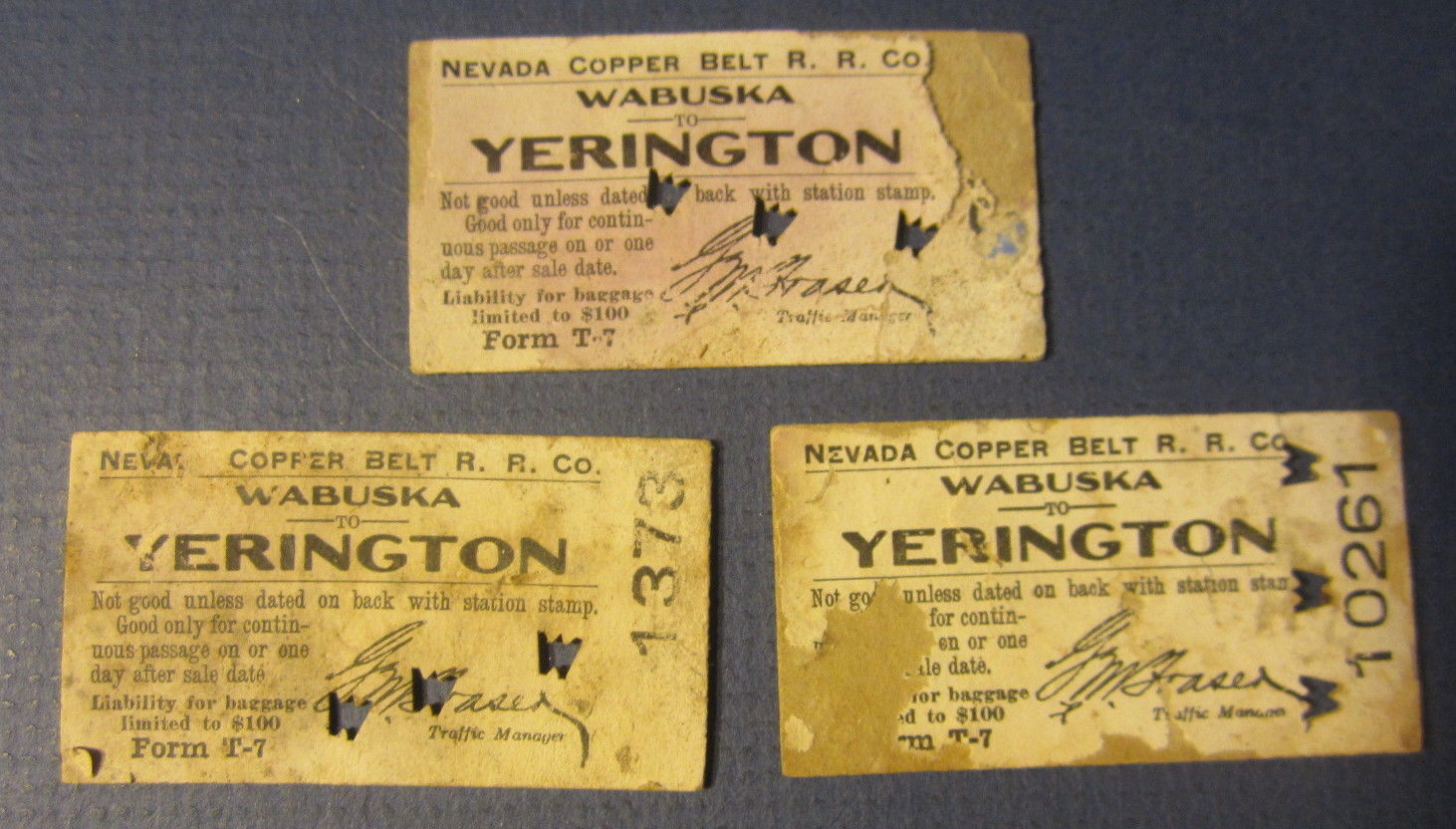
3 Old 1911-1913 NEVADA COPPER BELT Railroad - TRAIN Tickets - WABUSKA YERINGTON
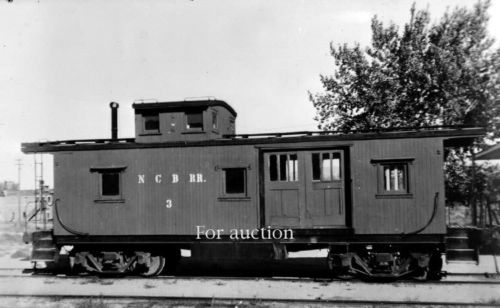
RAILROAD PRINT NEVADA COPPER BELT NCB WOOD CABOOSE #3

Posted on Facebook January 11, 2016
Tuesday, January 5, 2016

Yerington Monday: The Mines of Lyon County: Blue Jay Mine, Bluestone Mine & Thompson Smelter

Yerington Monday: The Mines of Lyon County:  Blue Jay Mine, Bluestone Mine & Thompson Smelter (Posted on Facebook January 4, 2016)


Cornetite is a phosphate of copper with hydroxyl named after the geologist Jules Cornet.
It was discovered in 1917. Cornetite is a rare secondary mineral in some hydrothermal
copper deposits.


World Mines Register

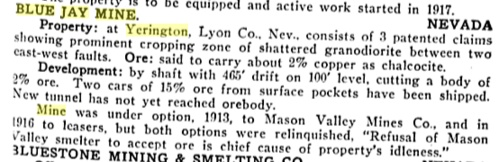
Blue Jay Mine is a mine in Nevada, nearby to Henry Hill, Luhr Hill and Yerington.
BLUE JAY MINE. A mile north of the Yerington mine, on the same side of the ridge, is the Blue Jay mine, in a band of dark rock which is distinctly visible from town and was supposed in the field to be a dike cutting the granodiorite. ECONOMIC GEOLOGY, 1908


Intermountain Industry and Engineering

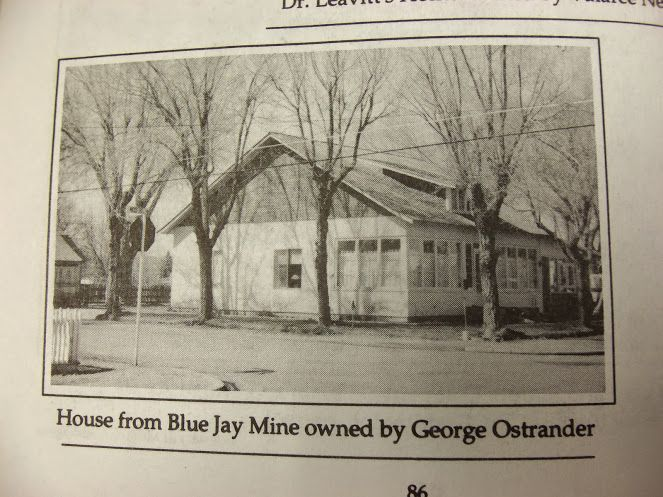
Ostrander house on West Street in Yerington was moved from Blue Jay Mine


Claims that became the Bluestone Mine properties were some of the oldest in the Yerington Mining District. Several of the mines were patented before 1890. Records show that in the early 1900's, Captain J. K. Delamar owned the Bluestone Mining and Smelting Company which encompassed the Bluestone Mine and a cluster of twenty claims that adjoined the Mason Valley Mine.

Prior to 1907, operations throughout the district were intermittent and never attained much importance, and the area did not yield much copper until after 1912. The most important of the early activities appears to have been the mining of 'bluestone' from the Bluestone Mine (Tetra Tech, 2010). Located in the hills above the railway center of the Nevada Copper Belt Railroad at Mason, the copper veins were sufficiently profitable in 1916 to constitute construction of a magnetic concentrating plant and furnace with a 100-ton capacity.

In 1916, production was estimated at 600 tons of copper per day. Output increased in 1917 to 1,000 tons per day. From 1917-1920, total production is believed to have been approximately 0.4 million tons, grading 1.5% - 3.5% Cu.


Records show that in the early 1900's, Captain J. K. Delamar owned the Bluestone Mining and Smelting Company which encompassed the Bluestone Mine and a cluster of twenty claims that adjoined the Mason Valley Mine.


Captain J. K. Delamar


Birth:
Sep. 2, 1843
Amsterdam
Noord-Holland, Netherlands
Death:
Dec. 1, 1918
New York
New York County (Manhattan)
New York, USA
This is the classic ‘rags to riches'-story of a poor boy who made it. Joseph was born in a banker's family, When his father Maximilian died, his mother and her seven children became poor. Joseph ran away from home and was put in a reformatory. When he was eighteen years old he went to sea. After a short time on sea he became captain, but when the gold fever struck Leadville (Colorado) he went West and bought several claims. This was the start of a successful career as miner and after that as a banker. Joseph became a multimillionaire. In 1906 he builded his townhouse on 233 Madison Avenue, now the Polish Consulate, and in 1916 his second home Pembroke was built in Glen Cove.

He died in the Roosevelt Hospital in New York of pneumonia, which developed during the night following an operation for gallstones. Joseph was buried on Woodlawn Cemetery in the Bronx, New York, in a beautiful mausoleum.

Half his estate of 34.000 dollar was given to the Universities of Harvard, Johns Hopkins and Columbia for medical research.


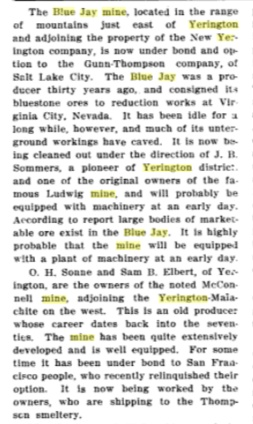
BLUESTONE MINE. The Bluestone mine is situated 4 miles southwest of Yerington, halfway up the east slope of Singatse Ridge, at an elevation of about 5,300 feet. It was worked about thirty years ago, and for a time supplied natural bluestone (chalcanthite) to the amalgamating mills at Virginia City. A. small smelter was built at the mine and ran for a few years on partly oxidized ore stoped above the 100-foot level; but no great production was attained and operations of late have been restricted to systematic exploration and to experiments in ore treatment. . . The mine is opened on three levels, approximately 100, 200, and 275 feet below the surface.


Remains of Bluestone Mill & Smelter


  • Land patented in 1883, one of the oldest mineral patents in the US
  • Owned by Joseph DeLamar in 1907
  • Thompson bought mine and put into production until Great Depression of 1929
  • Owned by GRG International since 2009

Bluestone Mine Trail


Bluestone Mine Trail is a 7.4 mile point-to-point trail located near Yerington, Nevada that offers scenic views and is good for all skill levels. The trail is primarily used for hiking & off road driving and is accessible from May until September.


This trail begins in the town of Mason and travels past the remains of the Bluestone Mine and then through a narrow but scenic canyon within the hills of the Singatse Range. It ends at the intersection with Western #27:


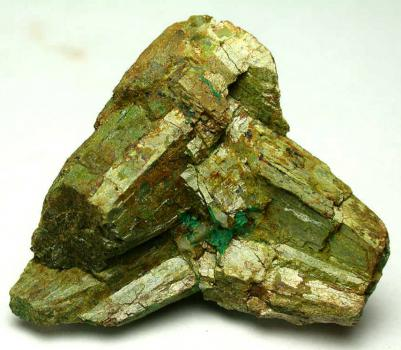
Enstatite is a common mineral in meteorites. Crystals have been found in stony and iron meteorites, including one that fell at Breitenbach in the Ore Mountains, Bohemia.


Enstatite is a mineral; the magnesium endmember of the pyroxene silicate mineral series enstatite (MgSiO3) - ferrosilite (FeSiO3). The magnesium rich members of the solid solution series are common rock-forming minerals found in igneous and metamorphic rocks. The intermediate composition, (Mg,Fe)SiO3, has historically been known as hypersthene, although this name has been formally abandoned and replaced by orthopyroxene.


Bluestone Mine, on an uphill spur West of Mason, had its own horsepower to pull the hill.
Bluestone Mine, on an uphill spur West of Mason, had its own horsepower to pull the hill. If the Baldwin 2-8-0's on the NCB line where the 'oxen,' then Bluestone's 37 ton Heisler was the 'bulldog' of rails. This is the original loco, but it can't be found at the Bluestone Mine, nor in Mason any more. After some migration, it wound up at Willits California in the Roots of Motive Power museum. On selected occasions, volunteer engineers pull it out, and carry happy passengers in a circle.


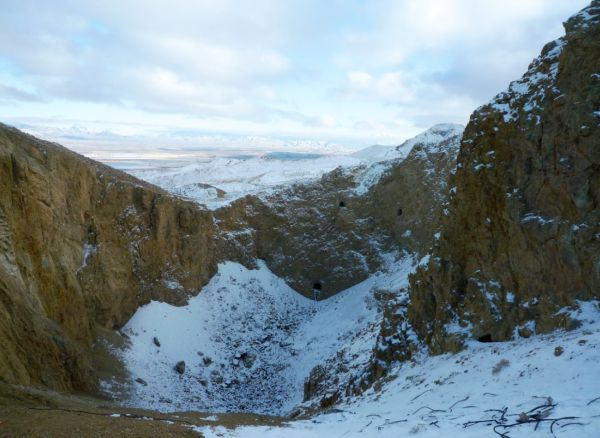
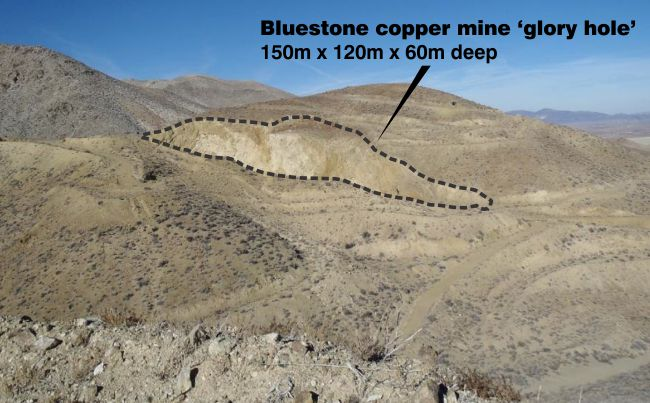
Bluestone copper mine 'glory hole' measuring 150m x 120m x 60m deep with underground development surrounding and below the 'glory hole'.


View from Copper Hill mine looking north towards Bluestone mine 'glory hole'.


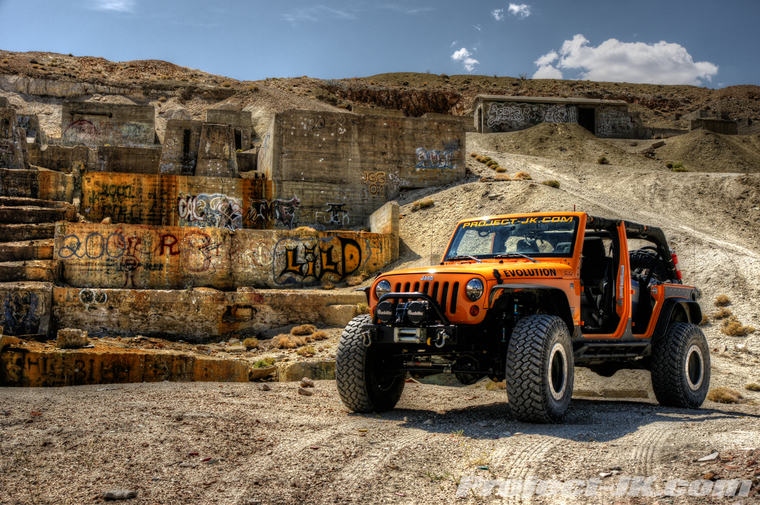
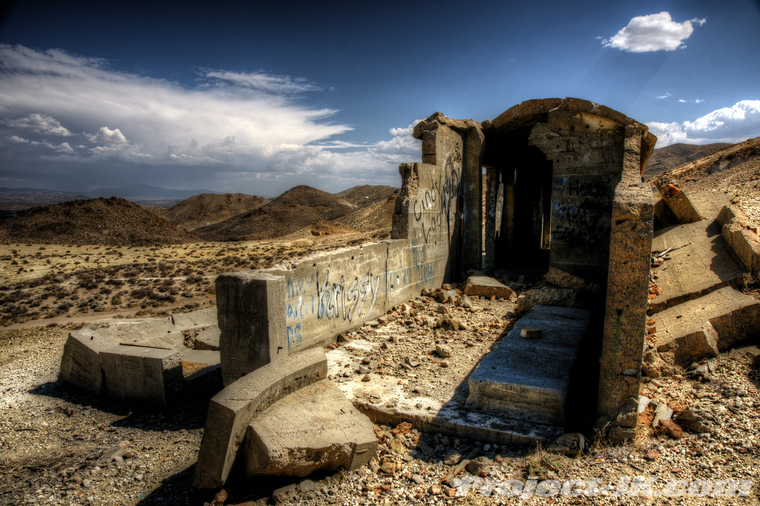
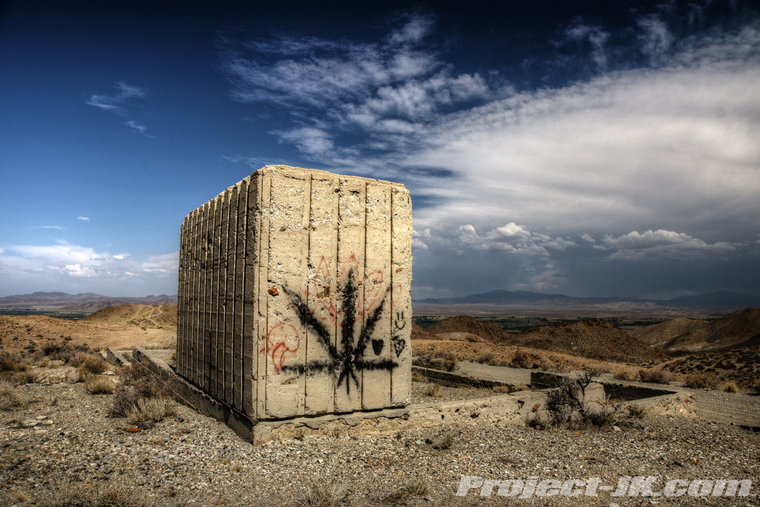
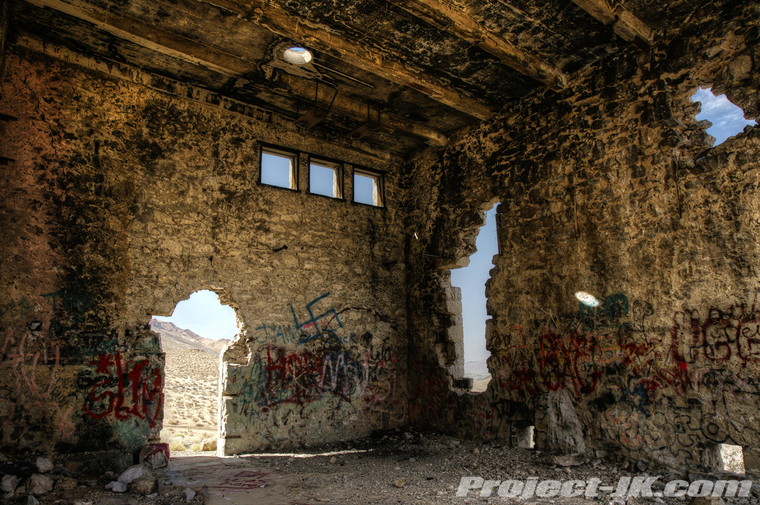
One of the oldest in the Yerington District, the Bluestone was mined between 1890 and 1930 and utilized a sophisticated system of electric ore carts on narrow gauge tracks. Unfortunately, all that remains today is the heavily vandalized, burned out, shot up and spray painted foundations of the old mill…


Bluestone Mine ruins near Yerington


Bluestone Mine ruins near Yerington


Just below the old mill site, there is a large area where sediment runoff from processed ore had collected for 40 years and then started to erode. If not for the odd color and metallic taste you have in your mouth while walking around this place, you would think that it was natural and formed over thousands of years…


Sediment runoff from processed ore had collected for 40 years and then started to erode.


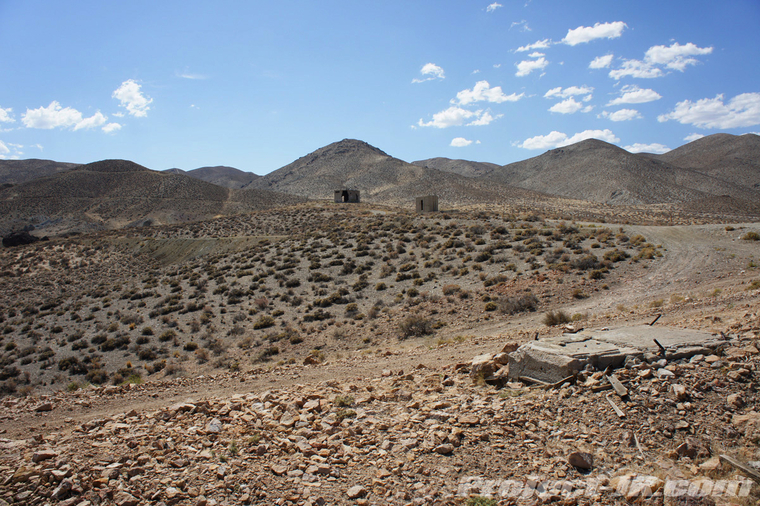
On top of the hill looking out toward the old transformer building that provided electricity to the mine…


Driving out to them, this is the first of two buildings…


This the main transformer building. With the exception of the vandalism, it really was an amazing sight to see..


Interior of the main transformer building.


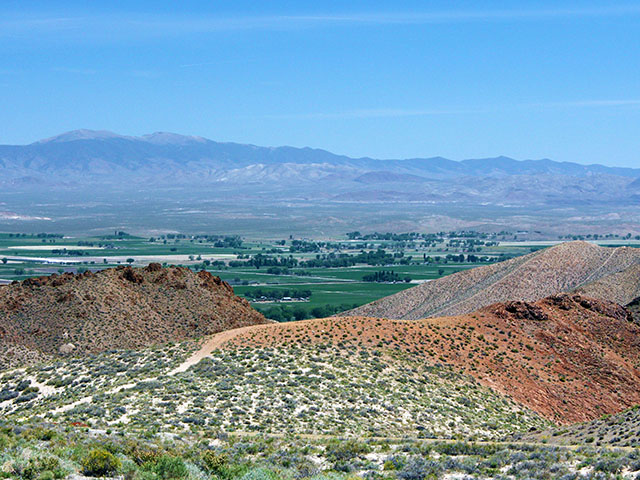
Bluestone view looking over Mason Valley.


Thompson Smelter


William Boyce Thompson


Mason Valley was where he opened old copper mines and built his smelter town, which was named Thompson, Nevada after him (now a ghost town);


The Bluestone Mining Company operated a concentrator near its underground mines 3 miles northwest of Mason.  The town of Mason was built in 1908 as part of William Boyce Thompson’s Mason Valley Mining company’s operations in the area.


Was once a very large milling site for the Yerington Nevada area and what they called the copper belt. Over the years people have come and gone most leave the place with a little history some have to leave their marks. Its life began in 1910 and ended in 1914 although there was some tries at revival, after that nothing has been operating at the site since 1923.


Thompson was a fascinating man with an amazing life.  To read more on him follow this link:   https://en.wikipedia.org/wiki/William_Boyce_Thompson

Thompson Smelter - Lyon County


Thompson Ghost Town


Thompson Smelter Flyby
https://youtu.be/m2rUeAIvqws


Ghost Towns and Mining Camps - Thompson
https://vimeo.com/88489084
Related Posts Plugin for WordPress, Blogger...