Showing posts with label Walker River. Show all posts

Wednesday, January 6, 2016

Yerington Monday: Wilson Canyon

Yerington Monday:  Wilson Canyon
Everyone from Yerington knows about Wilson Canyon.  It was the only way to get to Smith Valley and Wellington.  But it was much more.  It was a favorite picnic, party, hiking and fishing spot.  Nowadays it is a favorite location for off-road vehicles.  There was a petrified forest in the canyon when I was a kid, but I don’t know if much petrified wood is left. Wilson Canyon has an interesting history.  Click on pictures to learn more.

Picnic under the shade of the huge cottonwood trees along the south bank of the West Fork of the Walker River.


Wilson Canyon is a gorge cut by the Walker River through a series of volcanic cliffs. The canyon is located 13 miles (21 km) west of Yerington, along Nevada State Route 208. It is managed by the U.S.Bureau of Land Management.
The canyon runs through the Singatse Range in Lyon County, where the Walker River flows northeast into the Mason Valley. Over the two miles (3.2 km) of canyon the elevation of the Walker River drops by 120 feet (37 m), or an average grade of 1% (compared to 0.1% to the west of the canyon).
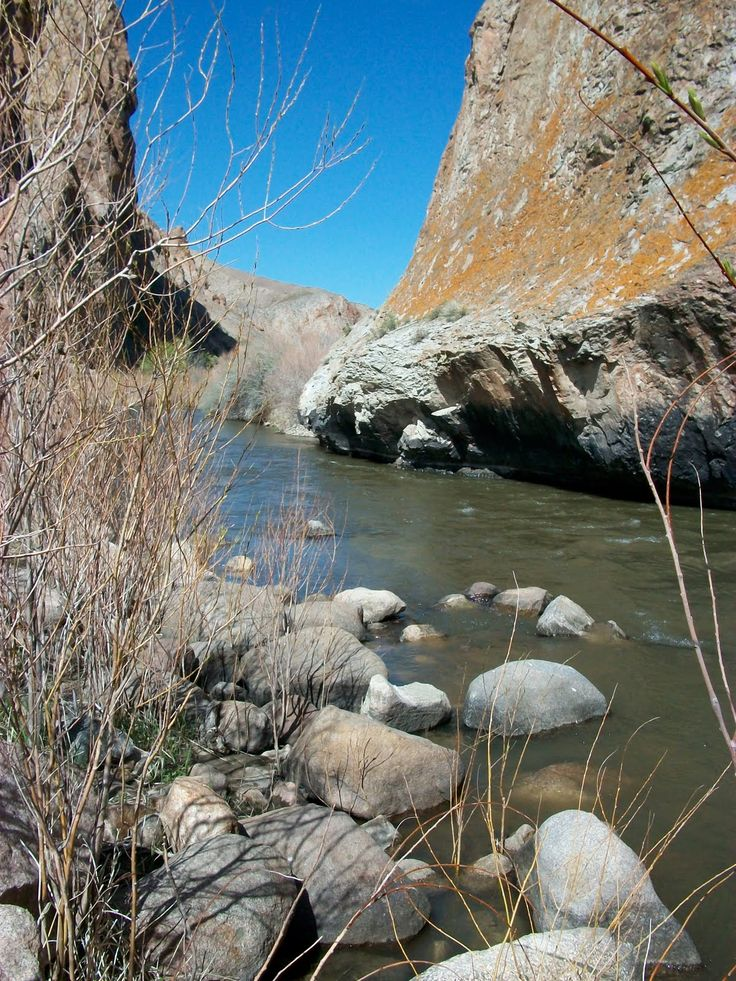
The canyon was named after "Uncle Billy Wilson" who was a miner and rancher, and for whom the Wilson Mining District is also named. The Nevada Copper Belt Railroad ran through Wilson Canyon; the track laid to the canyon was completed shortly before Uncle Billy Wilson's death.
1911 Nevada Copper Belt Railroad
Nevada Copper Belt Railroad Wilson Canyon
The Nevada Copper Belt Railroad ran through Wilson Canyon; the track laid to the canyon was completed shortly before Uncle Billy Wilson's death.
Exact Description: Wilson Canyon and the Wilson Mining District were named for brothers David and "Uncle Billy" Wilson. David Wilson (b. 1829), came west in 1850 during the California Gold Rush. He returned to the Midwest in 1853, married, and joined the Union Army at the outbreak of the Civil War. Wilson participated in at least one battle and was discharged with sunstroke. He then returned to the West.
The Wilson family settled in the Wilson Canyon area in 1863 mining gold discovered in Pine Grove by brother "Uncle Billy" and ranching in Mason Valley. The Wilson's mining efforts eventually yielded several million dollars.
David Wilson died in 1915, a prominent local rancher and community leader. He is buried nearby in the Wilson Ranch cemetery.
A Northern Paiute named Wovoka was raised with the Wilson boys and took the name Jack Wilson. He regularly attended family bible readings and prayers. Wovoka started the Ghost Dance movement in 1890 which swept into the Great Plans with potent political force.

What were known as the "1997 New Year's Floods" occurred in western Nevada and northern California. They were the result of a group of snowstorms in the Sierra Nevada at the end of 1996. Three additional rainstorms came between December 20, 1996. and January 2, 1997. These heavy rainstorms melted most of the snow-pack below 7,000 feet (2,100 m) elevation, including that at the headwaters of the Walker River. This, plus additional heavy rain between 7,000–10,000 feet (2,100–3,000 m), increased the amount of runoff from the mountains, with the consequence being the worst flood western Nevada had seen in 150 years. During this period Wilson Canyon flooded, the narrow width of the canyon increasing the amount of damage to the area. Large portions of Route 208 were destroyed, with pieces of roadway being found in the river after the flood subsided. Following the flood the highway was closed for two months and repaired at a cost of $726,000.
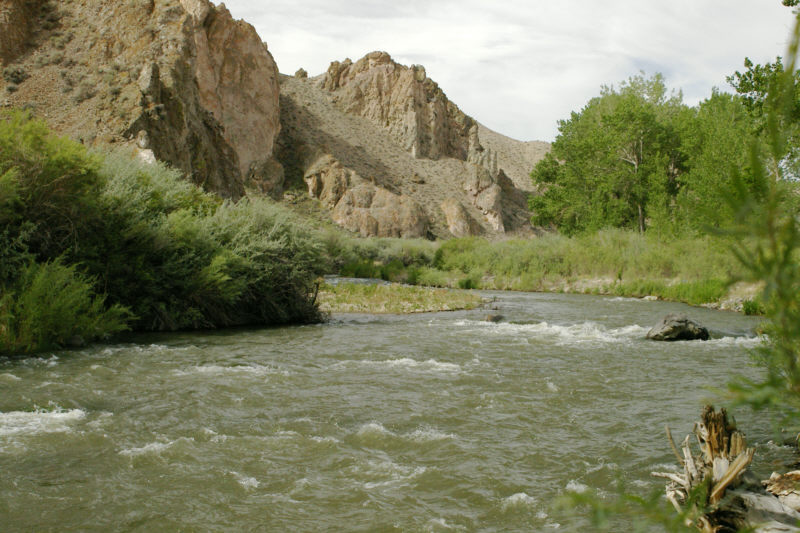
West Walker River in Wilson Canyon

A ground squirrel in Wilson Canyon, Nevada

Tuesday, January 5, 2016

Yerington Monday:  A Little Smith Valley History


A pleasant 21-mile drive from Yerington through Mason Valley and Wilson Canyon will drop you into beautiful Smith Valley, an agricultural community with an interesting history.  Yerington and Smith Valley have been like sister towns - like one big family. When  was a kid everyone knew everyone in both valleys. (click on a picture to learn more about its history.)


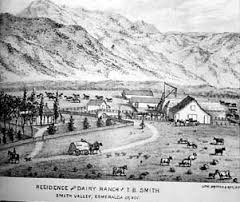
The lush meadow grass of Smith Valley lured Cyrus Smith and followers to settle on the west side of the Walker River and the location became known as Smith's Station. Cyrus Smith built a home in 1860 and a large barn in 1872. For many years, the ranch was owned by Andy Sayre Jr., who sold it to the present owner, David Traitel. The Smith barn has been in continuous use for over 130 years.


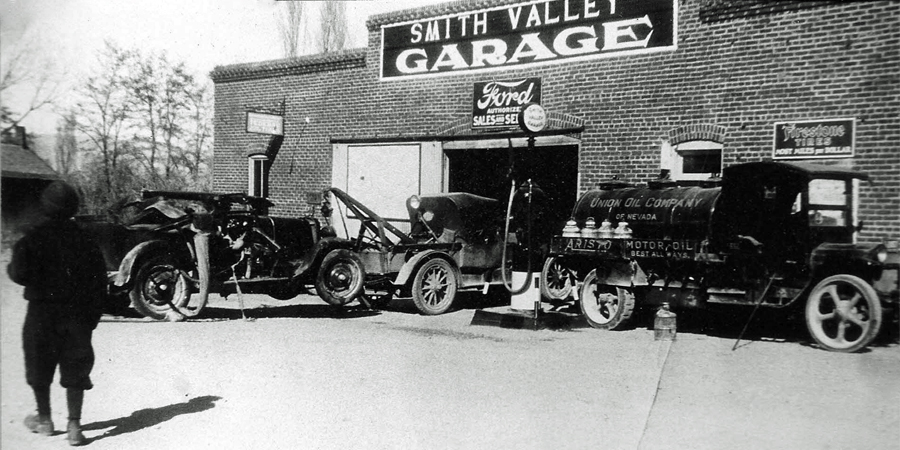
Smith Valley Garage has been serving the agricultural equipment needs of Northern Nevada and the Eastern Sierra for over 90 years.  Bert Werner joined with Johnny Neumaker and a banker in 1919 to build Smith Valley Garage.  With determination and hard work, they even survived the depression and bank failures of the 1930’s.  During World War II, the business consisted primarily of service, maintenance, and making improvements to all kinds of farm, road, and mining equipment.  This enabled ranchers and others to produce more for the war effort.  In the 1950’s, Bert Werner sold the business to his son, Bill.  In 1959, it was purchased by Bob and Martha Griffin. The next owner was Ben Barton, and later it was owned by Ernie Groso.  The current owners, Dan and Shawna Smith, purchased the business in 1983.
What started out as a co-op and blacksmith shop in 1919 gradually evolved over the decades into the computerized environment in which we operate today.  Although steam pumps and daisy reapers have been replaced with computers and GPS systems, our service to our customers has never wavered.  We remain dedicated to the agricultural community as never before.

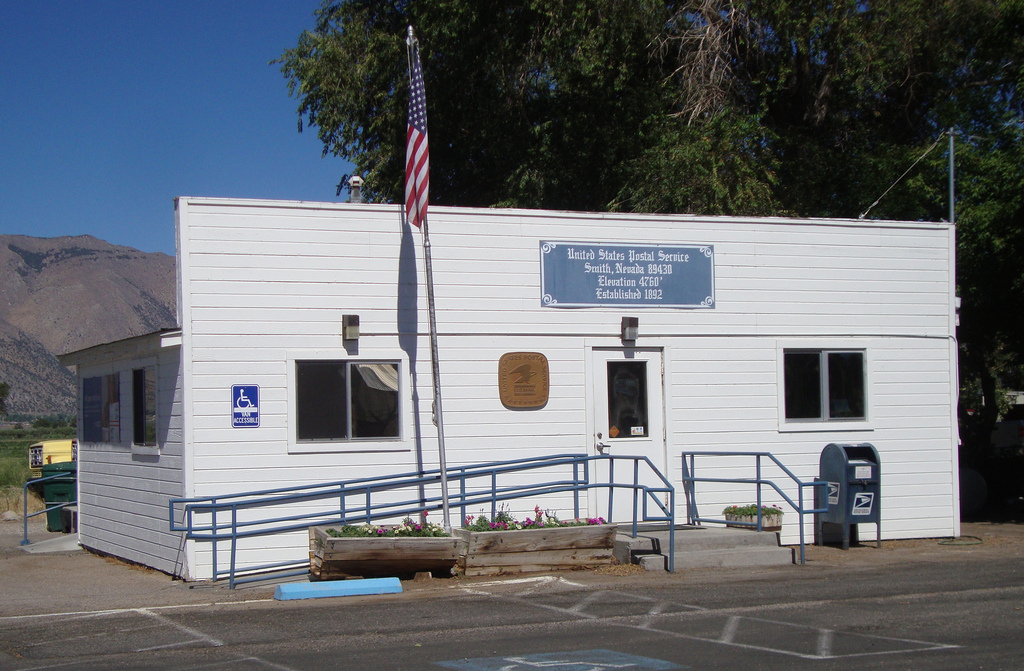
Date: 1892 SV Post Office
Location: 2306 Highway 208
History: The Smith Post Office was established on June 4, 1892 and located in the home of Laureston Robert Ames on Smith Gage Road. Ames was the first postmaster  and served until March 4, 1902. This house is now located on the corner of Highway 208 and Harrison Drive. A new building for the post office was built between the Central Mercantile and a service station (which now houses Renner’s Equipment). The  building was later moved to its present location in Smith sometime after 1946. Two  additions were made to the post office that added more post boxes and a restroom. In the 112-year history of the Smith Post Office, only 10 people have held the position of postmaster.


Date: 1926
Location: Central Mercantile and Central Bar are in Smith, locally known as Central, on Highway 208


History: In 1926, Harold Elder and Harry Wylie built the Central Mercantile and August Menke later added a butcher shop to the business. In 1932, after prohibition, Harry Wylie added a small bar. Guy Fabri purchased the property and operated the business  until January 1, 1946, when John and Joe Giomi bought it. The Giomi brothers wanted  to make a larger store so they moved the old Wellington Bar, which was then south of  the Heyday Inn, to where it is presently located.


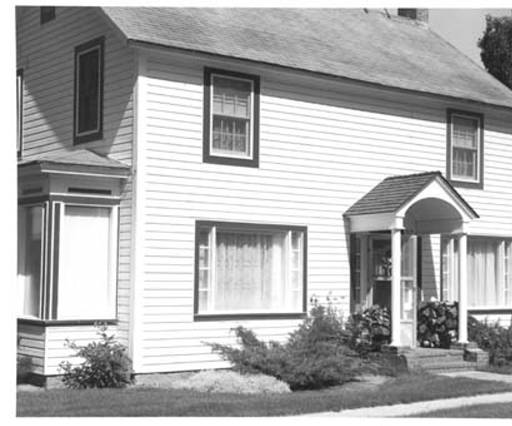
Fred and Dr. Mary Fulstone's Home  
Date: 1879
Location: Approximately 1/2 mile south of Smith on Highway 208


History: The Simpson family built the two-story front portion of the house in 1879. The back section, which became a kitchen, dining room, and future waiting room and medical office, was added later. In 1916, Joe and Fred Fulstone bought this 600 acre ranch from the Simpsons. Joe died in the flu epidemic of 1918. Fred married Dr. Ruth Hill in 1919. Dr. Mary, as she was known, was a graduate of the UCSF School of Medicine and held office hours in this house until she retired at the age of 84. Dr. Mary passed away in 1987 at the age of 95.


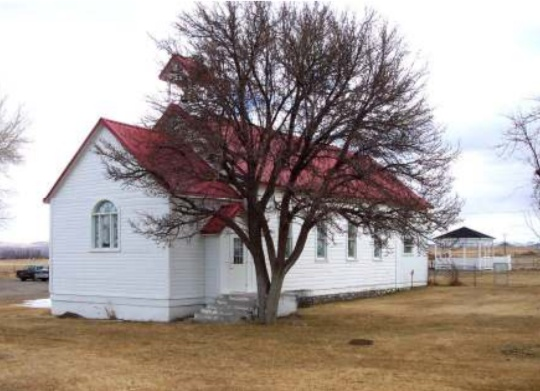
Smith Valley Community United Methodist Church
Date: 1895
Location: 44 Rivers Road, Smith


History: The Methodist Church, which began as a circuit rider ministry, was built on the vacated site of the old school house, on land purchased from Samuel and Isabella Weymore. They were paid a five-dollar gold piece for "one acre more or less" as described on the deed. Construction began in 1894 with a native stone foundation built by Sidney Sweetman, a local mason, and was completed in July, l895. The remodeled sanctuary, with its exceptional stain glass windows, is still sitting on that foundation. The church bell was added in 1930 and it continues to ring to open worship services today. Mr. C. Turner originally bought the bell for the 1890 Wellington School, but when the school moved, the bell was moved to the church according to the directions in 18 Mr. Turner’s will. The church celebrated its centennial anniversary in 1995.


The Smith Valley SV
Date: 1919-1920 to present
Location: The Smith Valley SV is located on the Wellington Hills.

History: The county surveyor marked the SV site on the hill across the road from Smith Valley High School. Students from the high school laid the rocks for the SV, but on completion, decided that it was too small. In 1924, they constructed and white washed the SV that is present today. The letters are approximately 50'x30' and are visible from most Valley locations. At one time burros packed water up from the Plymouth ditch so that students could whitewash the rocks. Today, Block SV students (Varsity Letter winners) and staff continue this tradition, however, they now use quad ATV to haul supplies up the hill to paint the SV letters.
Related Posts Plugin for WordPress, Blogger...