Showing posts with label Smith Valley. Show all posts

Saturday, July 9, 2016

Yerington Monday: What’s With Those Big Hillside Initials?
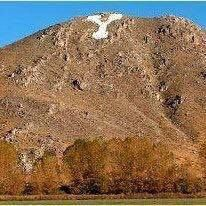
What’s With Those Big Hillside Initials?


Giant capital letters adorn hillsides near many cities and towns in the American West. These letters, typically constructed of whitewashed or painted stones or of concrete, are cultural signatures. They serve as conspicuous symbols of community and institutional identity, and they represent an idea, perhaps traceable to a single point of origin, that diffused quickly and widely early in this century.  The letters are distinctive vernacular landmarks in the western states, rarely occurring elsewhere.  

Both environment and culture have affected the distribution of those hillside monograms. An accessible and fairly steep slope, undeveloped and preferably treeless, is the first requisite. If it is public land, such as Forest Service, Bureau of Land Management, park, or school property that is protected from urban encroachment, so much the better. Many western communities can meet these requirements admirably.

Hillside symbols have a surprisingly respectable history dating back some eighty years. To a remarkable extent the letters can be traced to a single decade, 1905-1915. They have almost always been built and maintained by college or high-school student groups. The earliest letter-building projects were devices for defusing increasingly violent inter-class rivalries, which college administrators and faculty found difficult to control. It apparently worked. Making a letter was often a gala community event, an organized "men's workday" declared a formal school holiday, with picnic lunch and supper provided by campus women.

Once built, letters quickly became symbols of community and school, instant traditions shouting "Here we are!" Illuminating them before major sports contests or for homecomings began early. At such times, when tensions between rivals ran high, the letters were prime targets for raids so they were zealously defended through the night with bonfires and beer.

Their maintenance, including the annual whitewashing or painting, has often been an important ritual in campus life. In some areas the letters had a second function in earlier days as navigation aids to aircraft pilots, helping them identify look-alike desert towns.
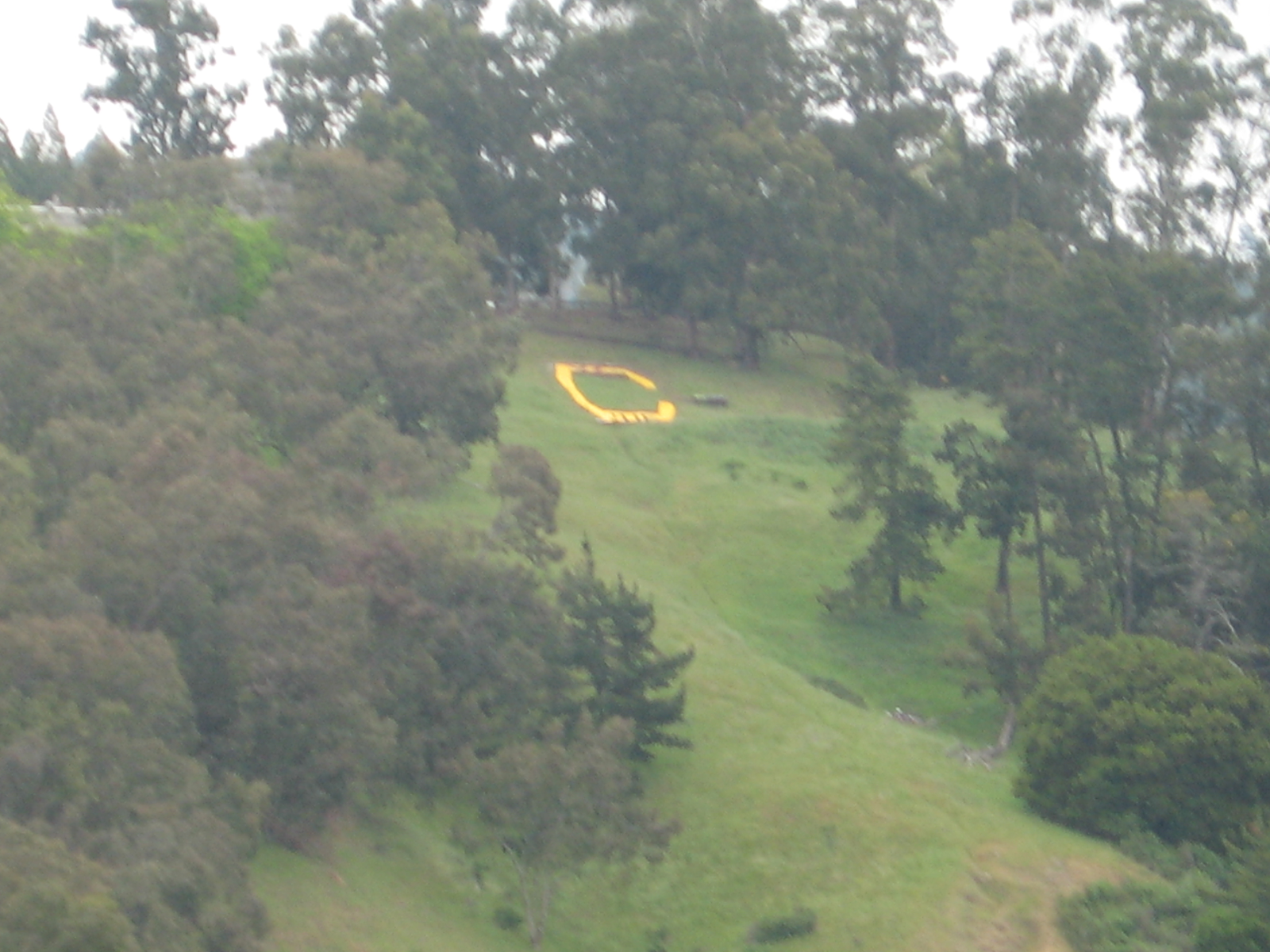

“Big C” Granddaddy of Big Initials

The University of California's "Big C" on the Berkeley hills is the granddaddy of them all. Only seventy feet high, the Berkeley letter has been dwarfed by many others over time, but it has persisted. It was built by the freshman and sophomore classes over two rainy days in the spring of 1905 and finished in time for official recognition at the annual Charter Day celebration. The traditional brawl between the two classes had degenerated into something close to guerrilla warfare, a kind of primal savagery known as "the rush" that was likened by one contemporary to Anglo-Saxon raids on the British coast. The intramural battles were receiving increasingly lurid press coverage, discrediting the university throughout the state. Legislative appropriations and alumni giving were threatened. In a well-publicized truce, the classes of '07 and '08 agreed to end the rush and instead devote their energies to constructing a masonry C on the steep, grassy slope behind the campus. Maintaining the six-inch-thick slab of concrete, painted yellow, was a job assigned to succeeding freshman classes.

There is no apparent precedent for the Big C. Announcement of the plan to build it brought a storm of community and faculty protest. Opponents denounced it as unworthy of the university, claiming it would "for all time disfigure the sensuous beauty of the hills," and would "slide and become an eyesore." The color yellow "wouldn't harmonize." The mathematics professor A. W. Whitney protested that "living in contemplation of this kind of vulgarity students would soon be painting C's on Yosemite's El Capitan. And why not? Why is it worse? The Berkeley Hills in their way are just as fine as Yosemite.... One thousand times as many people look on them....They front on the Orient....Our wantonness would be in the eyes of the world. We cannot afford to stand for such vulgarity." Charles Mills Gayley, the distinguished professor of English literature, had an alternative: "A great C of acacia trees, with their burst of golden spring bloom. Or something else, anything." Both the influential Hillside and the Town and Gown clubs protested by petition. The C would offend many of their members, citizens who had long been loyal friends and benefactors of the university.

But others were supportive, especially the engineering and architecture faculties and the emerging athletic establishment. They saw the C as a symbol of conciliation that would also celebrate "the love and loyalty in the heart of every Californian." The renowned campus architect John Galen Howard gave encouragement, counseling how to line up the letter with the axis of the campus plan.

The first summer the C was damaged by dynamite, perhaps in one of the earliest instances of eco-radicalism. The letter was immediately seized as a target by rival schools. It was hallowed in the school song: "On our rugged eastern foothills stands our symbol clear and bold, Big C means to fight and strive and win for Blue and Gold." Today the letter stands below the big industrial complex of the Lawrence Berkeley Laboratory, inconspicuous and shielded from all but direct view by groves of eucalyptus and Monterey pines.
College Craze
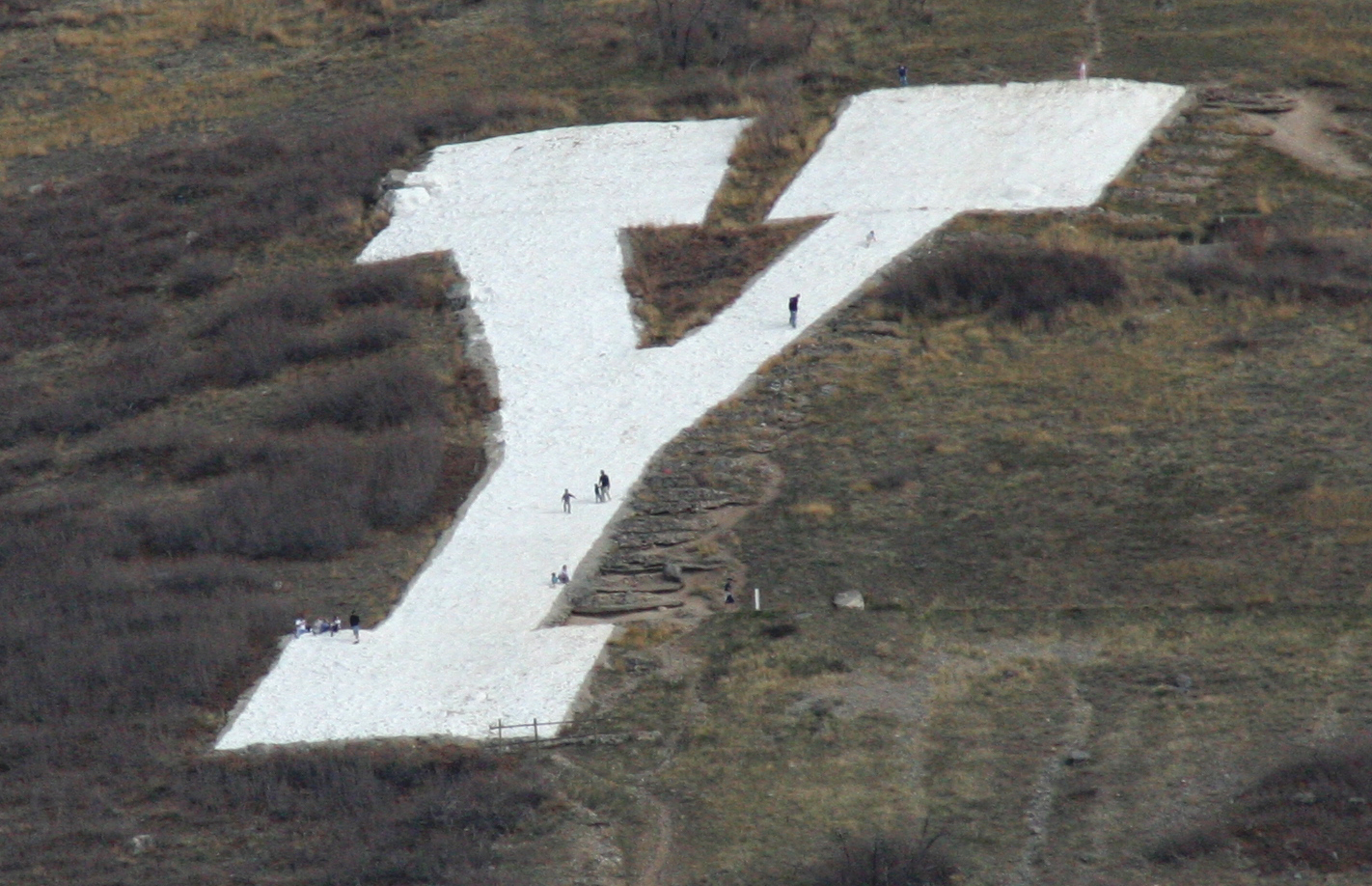

Yet the Big C had started something. Even then, Berkeley, for better or worse, was a model. By the next year, 1906, Brigham Young University had a Y two thousand feet above its Provo campus on the steepest part of Utah's Wasatch Front. This letter was 320 feet high, more than four times taller than the Berkeley C. Pack horses, and in later times helicopters, were used to reach it.  

In the spring of 1907, the slopes behind the University of Utah overlooking the Salt Lake Valley sprouted a block U, again a pacification gesture among rival student groups. Popular Mechanics called it "the largest college monogram" although it was only half the height of the Y at Provo.

Three more college letters appeared in 1908. One was a one-hundred-foot M on Mount Zion behind the Colorado School of Mines at Golden. Here, as elsewhere, engineering students and faculty played a prominent role in the planning, and the construction day was declared a school holiday. Laying out the emblem on a twenty-three-degree slope so that it would be seen from the town as a perfect block letter was described as an instructive lesson in descriptive geometry. In true miner fashion, burros were used to move tools and materials to the construction site.

In the same year, less than one hundred miles north, Colorado A & M, now Colorado State University, built a much larger A for Aggies. In this case the link with earlier letters is documented. Students from Fort Collins traveled to Salt Lake City to inspect the new U at the University of Utah before beginning their own project. The A has persisted as a prominent Front Range landmark, although the institution's name has changed and its athletic teams are now known as the Rams.

Also in 1908 the University of Oregon at Eugene built the first of its block O's, a wooden structure on Skinner Butte near the railway station. It was later converted to concrete, and finally, in 1958, to metal. For many years Corvallis raiders visited the O, but today it is almost completely obscured from ground view by trees.  Then came the flood tide. Between 1912 and 1915 at least eleven more western colleges and universities put letters on their mountains.
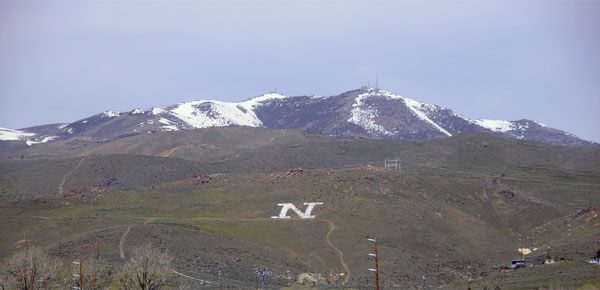

The University of Nevada students joined in with a geometrically perfect block N, 180 feet high, on Mt. Peavine overlooking the Truckee Meadows and Reno. "It isn't right," the student yearbook observed, "that Nevada spirit should show itself less plainly than California to the west or Utah to the east." As with the others, the project was a collective effort. Classes were canceled, a bucket brigade carried water and cement up the sagebrush-covered slope, and a women's auxiliary provided the picnic that always seemed to follow.


Between 1905 and 1915 at least twenty collegiate letters were built in the western states. Others came later.

Nevada Hillside Big Letters

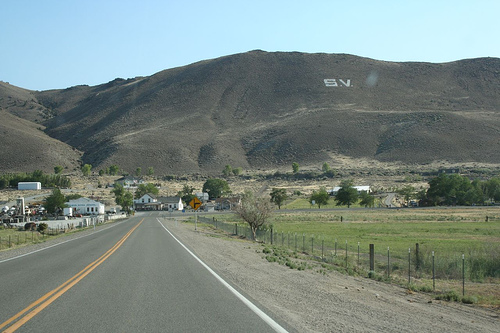
Virtually every community along I-80 between Reno, Nevada, and Rock Springs, Wyoming, seems to have one.

High schools and a few junior colleges and grade schools followed the collegiate example, and today their letters vastly outnumber college letters. Several early ones were in Nevada, including the E at Elko, built in 1916 to honor a physical-education instructor who had lost his life in a snowstorm while leading a student group in the nearby Ruby Mountains. The T at Tonopah is lighted by a spotlight on the roof of the Mizpah Hotel. It celebrated the Nevada State Championship won by the Tonopah girls' basketball team in 1917. At Winnemucca, where a handsome W was built to honor another girls' championship team in 1920, a trust fund was set up to pay for periodic whitewashing, but, according to a recent report, "no one knows where the money is."
Other early Nevada high-school letters include the BM at Battle Mountain (1925), the V at Virginia City (1926), the L at Panaca, Lincoln County (1927), and the L at Lovelock (1931). The S at Sparks became a focus of controversy in the summer of 1985 when the ski manufacturer, Salomon-American, acquired the land on which it stood and redesigned the fifty-year-old symbol to resemble its corporate logo. In the face of community complaints, the company apologized and restored the letter to its original form.

In some cases, the new spray-can graffiti artists find these letters irresistible targets, to the dismay of student groups responsible for their upkeep. In earlier years students sometimes placed class numerals alongside letters. In August 1966, the citizens of Reno, Nevada, awoke to find the university's seventy-five-year-old N prefixed by a Greek sigma, the work of a college fraternity. Raids by groups from rival institutions armed with aerosols or cans of paint still enliven campus life.
The letter on the mountain is a subject without a literature. The map represents the author's personal observations over several years as well as the gleanings of students and associates who have joined the letter game. Additional examples will assuredly turn up. I predict that most will lie west of the hundredth meridian.

These monograms, usually of respectable antiquity, are part of community and landscape history. To some extent they reflect the spirit of the time when most were constructed, before environmental preservation and esthetics became concerns in our culture. Virtually all have been produced by student groups and represent their institutions. The letters remain a conspicuous and durable part of the identity of many communities, fortifying institutional allegiances and the sense of place. Occasionally they arouse antipathies among those who are offended by the intrusion of the human hand on often dramatic scenery. However, for travelers in the arid West the letters are "anchors to the eye," adding diversity and interest to the natural beauty of the landscape.

Hillside Letters in the Western Landscape  by James J. Parsons
(Partial Reprint courtesy of Landscape, vol. 30, No. 1, 1988.)

Man starts writing hillside message to win back ex-girlfriend ‘TINA’ – but gets tired and gives up
Man starts writing hillside love message, gets tired and gives up
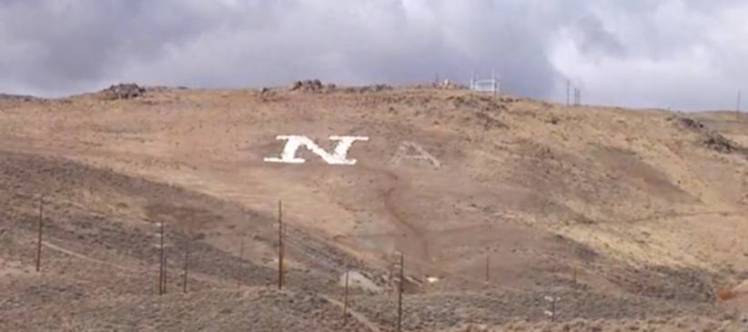
A mysterious ‘A’ written into a Nevada hillside beside the permanent ‘N’ was discovered to be part of a love message (Picture: KOLO News)
If you’re trying to win back an ex you might send flowers, a heartfelt mix tape or even try the classic stand-outside-the-house-and-shout-to-the-window move – but this wasn’t enough for one Nevada man.
Brent Wilbur’s attempt to win back his ex-girlfriend by carving her name into a large hillside was great in theory – but then he got tired and gave up.
For 100 years, a hill near Peavine Mountain in Reno, Nevada, has had a large ‘N’ etched in white rocks as a symbol for the University of Nevada.
Innovative Brent thought he would add some more lettering to spell out Tina’s name across the hillside as a declaration of his love.
Unfortunately, after spending five hours writing the letter ‘A’ in chalk next to the ‘N’, he got tired and left.
Local residents were quizzical about the mysterious capital letter which had suddenly appeared and traced the lazy love attempt back to Brent through his LinkedIn profile, which showed an image of the hillside message.
AD_121198690.jpg

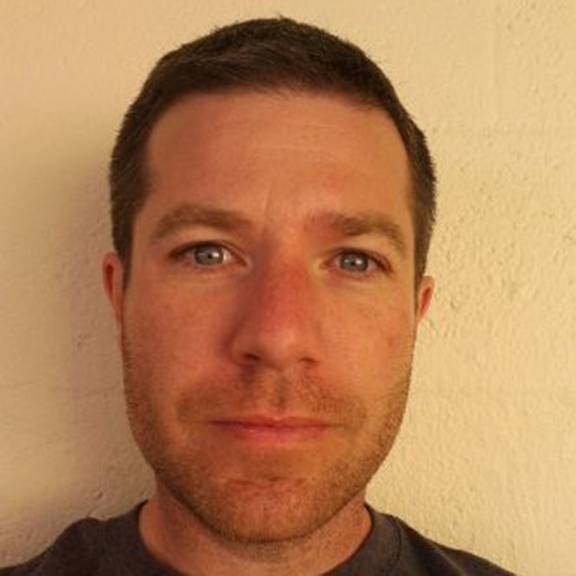
Lazy lover: Brent Wilbur tried to win back his ex with the hillside message – but tiredness took over ‘I rented a truck and bought a palette full of marking chalk, actually I bought all they had left,’ he told local media.

‘I was trying to write a woman’s name, “Tina”. I started with the ‘A’ and just ran out of steam.’
Tina, who Brent only dated for nine months four years ago, clearly left a mark on him as he said he had no regrets over the message – even if there may be legal consequences.
‘I owe her a great many apologies for the way I treated her,’ he added.
Luckily for Brent, local authorities have since said the letter does not violate any state codes and the University of Nevada believe nature will wash away the ‘A’ in its own time.
Sarah Kerr for Metro.co.uk Saturday 23 Nov 2013 12:18 pm
Tuesday, May 24, 2016

Smith Valley Event: Author Program Smith Valley - Ronda Eden May 20, 2016

Smith Valley Event:  Author Program Smith Valley - Ronda Eden  
May 20, 2016


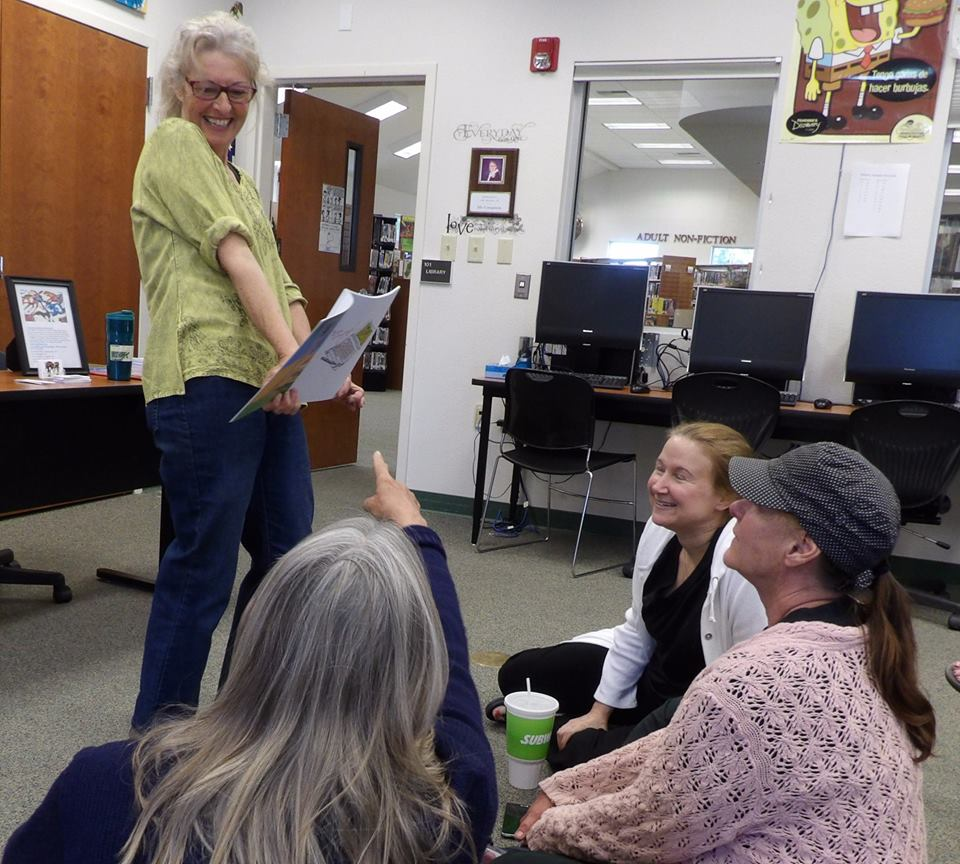
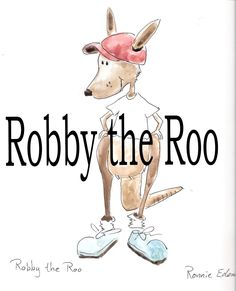
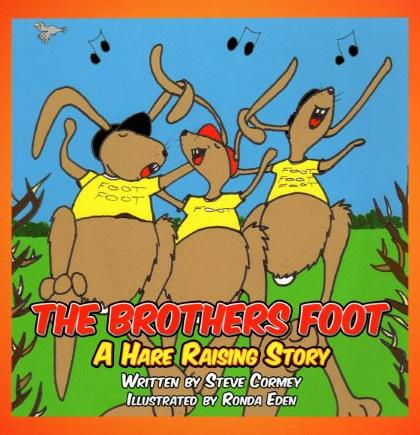
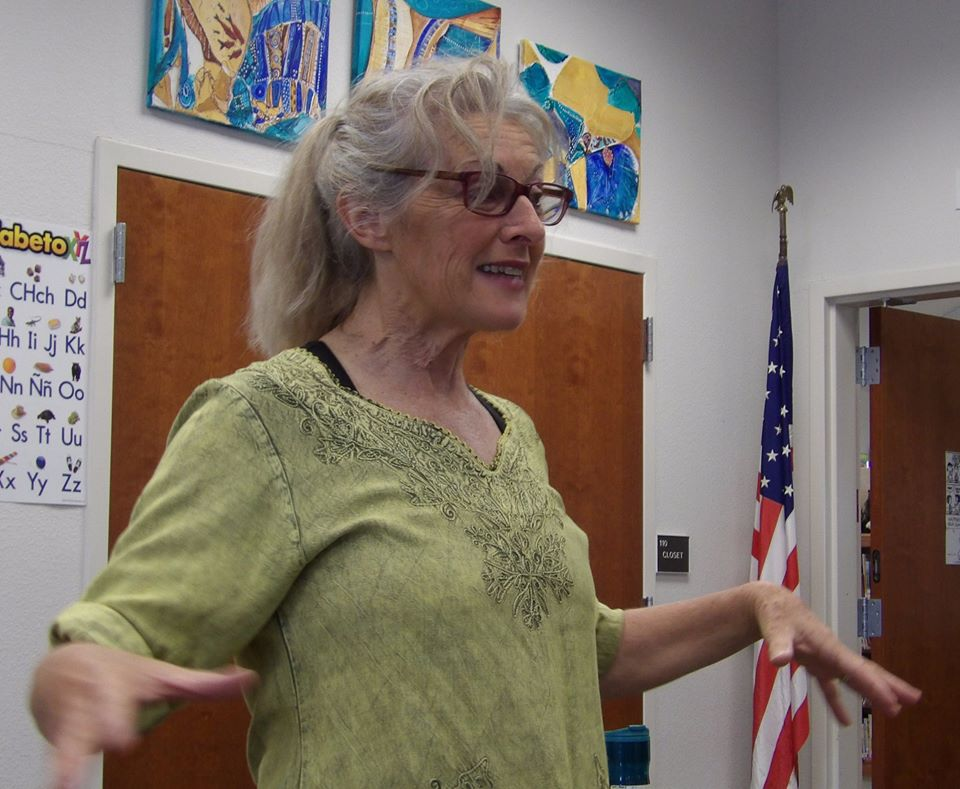
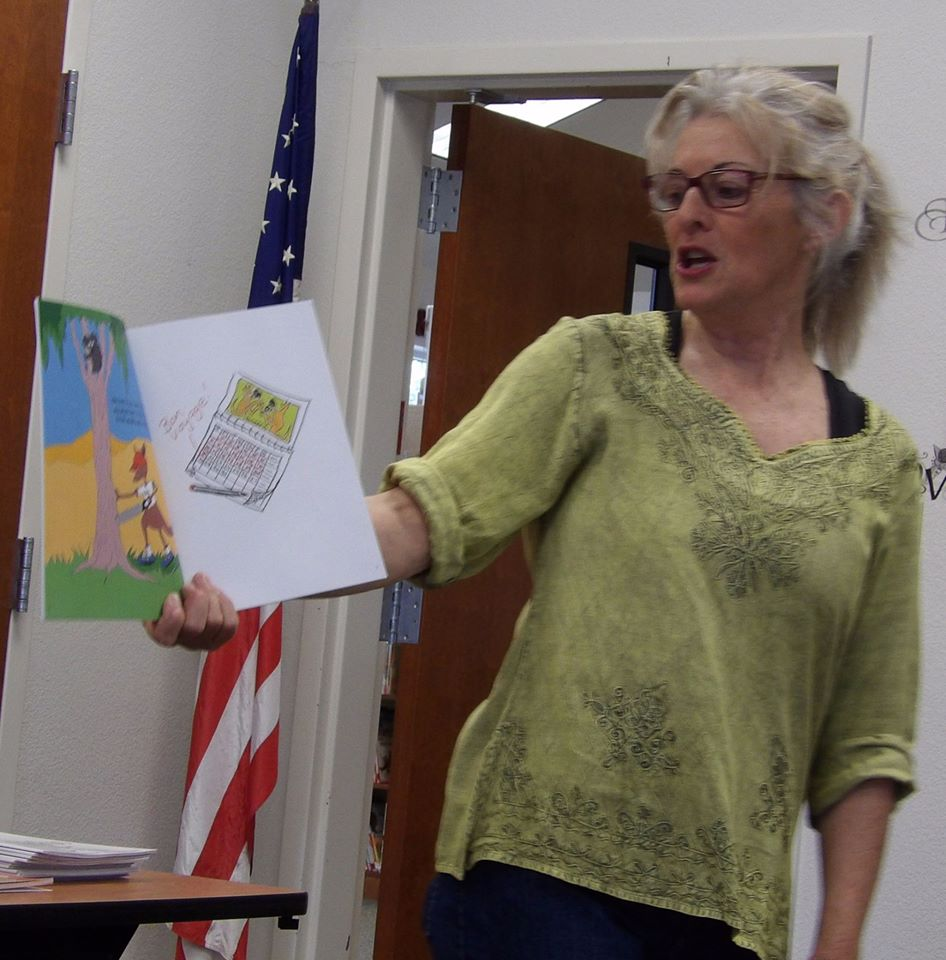
Attended this Ronda Eden’s book reading at the Smith Valley Library.  I loved it!  I felt like a kid again.  She is very dramatic in her reading and definitely knows how to keep your attention.  Eden read several of her children’s books.  Robby the Roo is her new book, which she wrote and illustrated for preschool through first-grade children.  She also read her other book, The Brothers Foot.


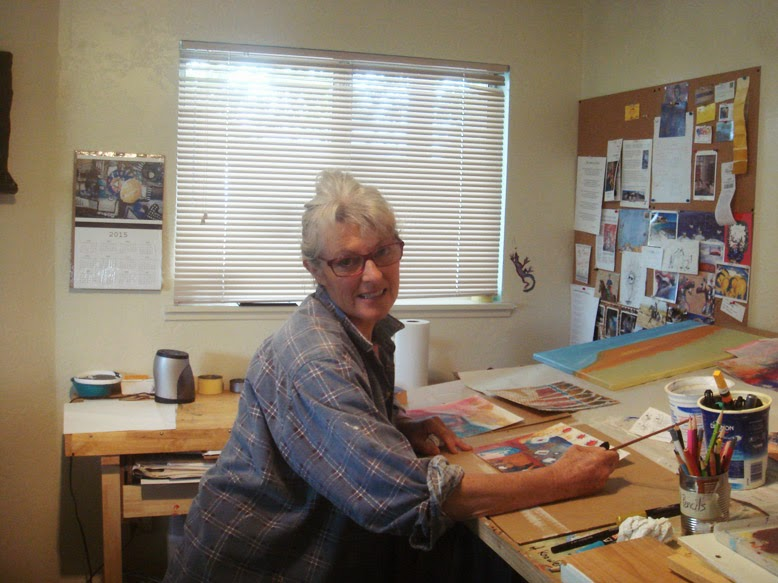
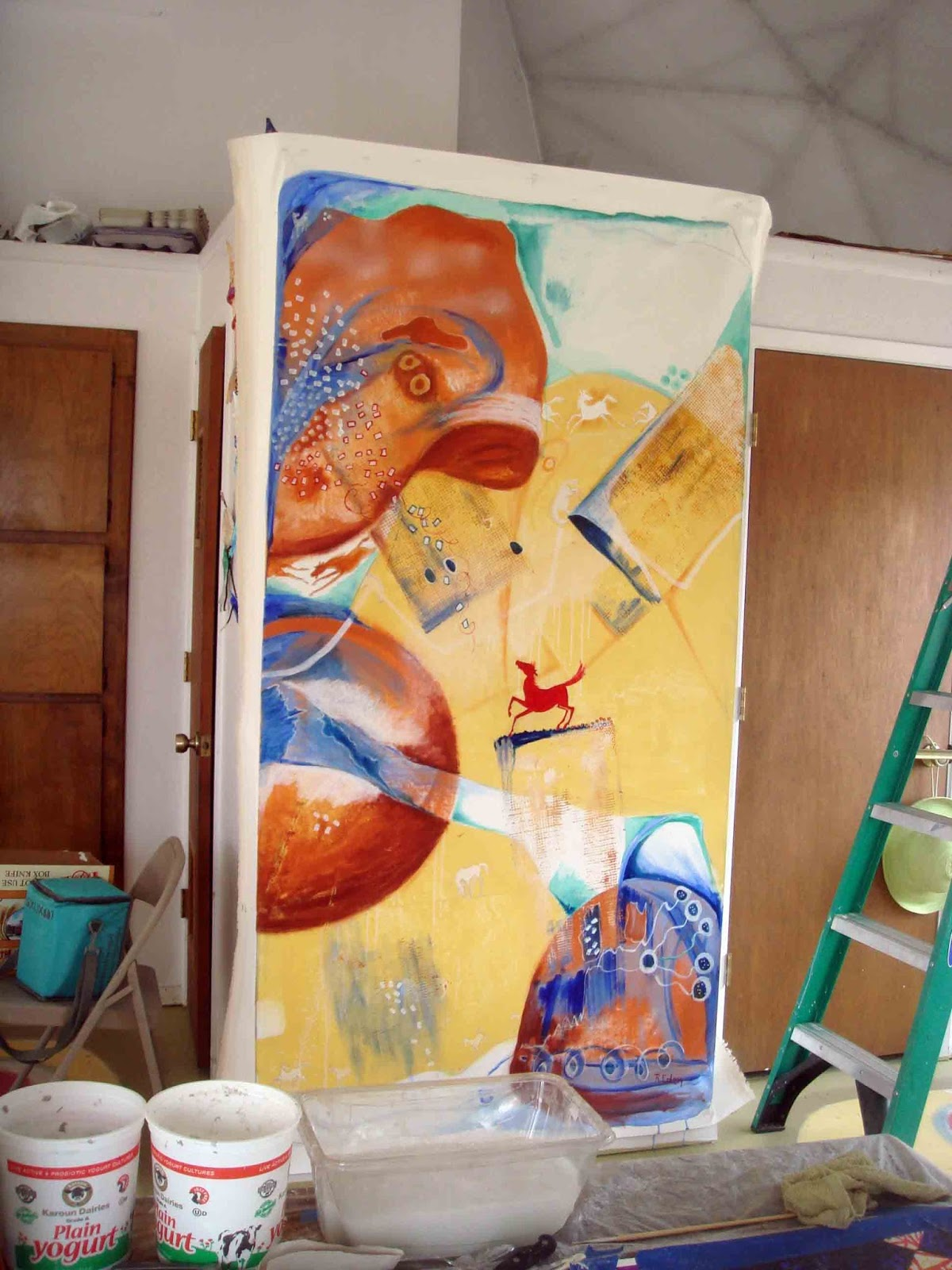
The Artist in her Studio


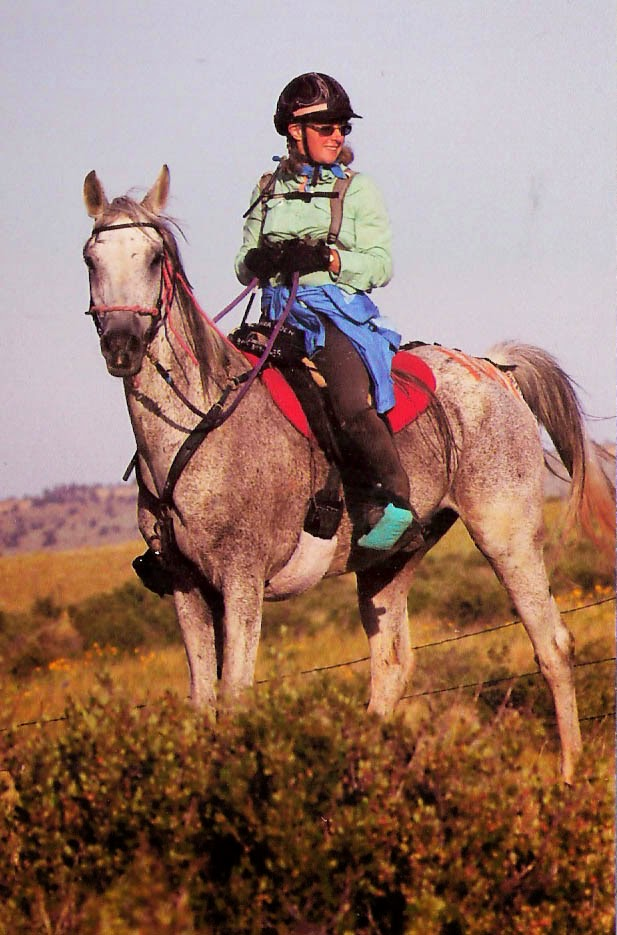
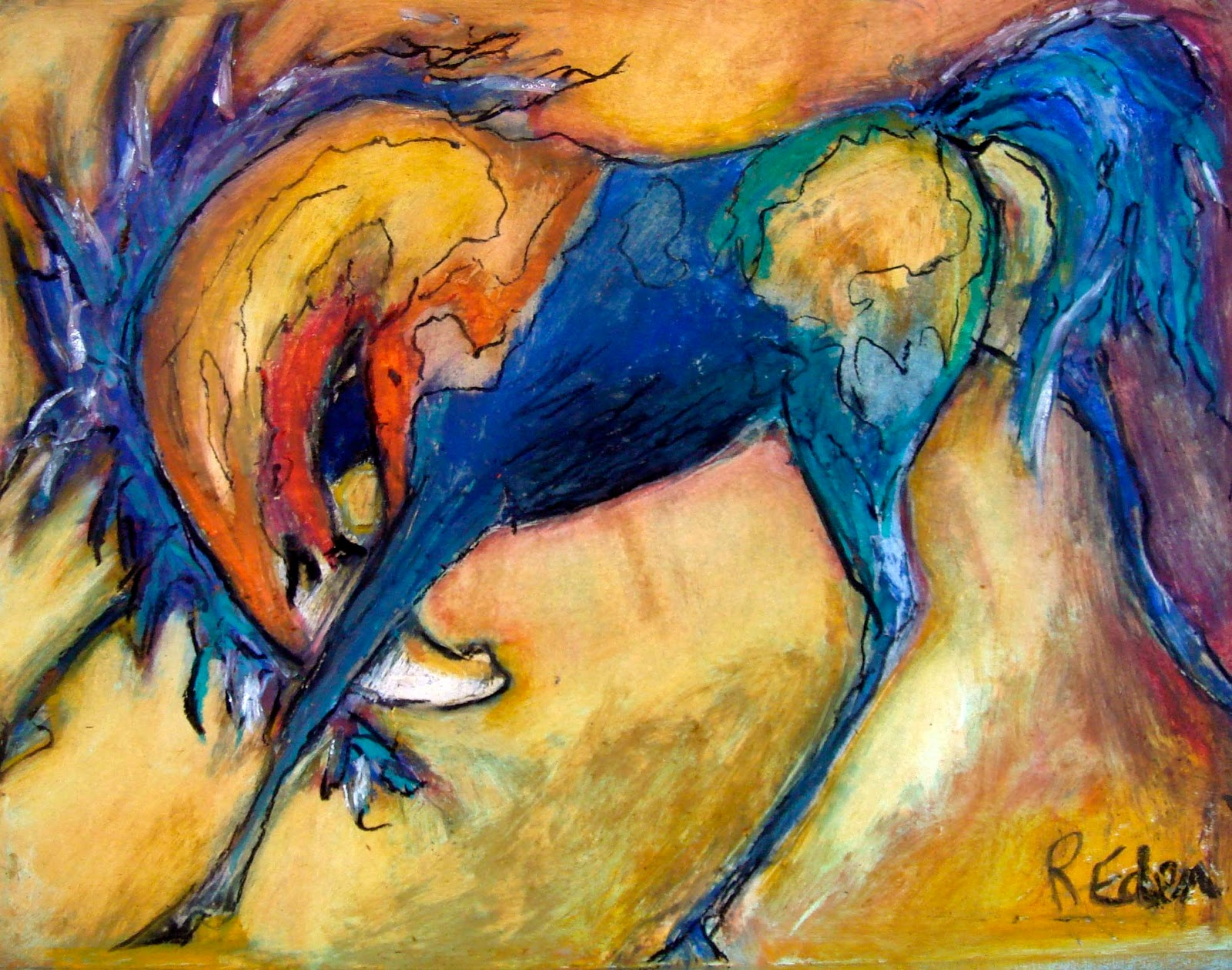
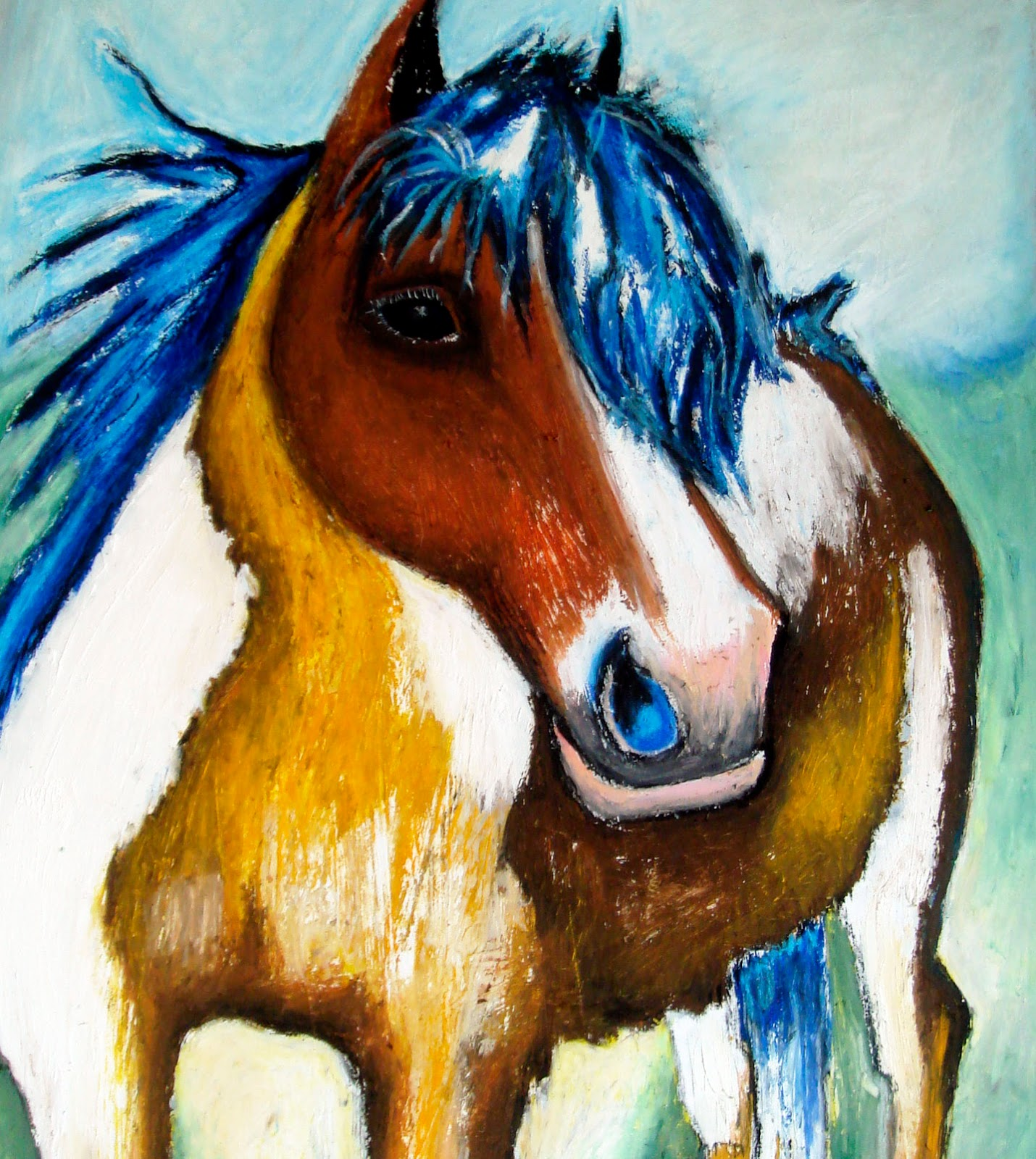
Ronda Eden is a very multi-talented person.  She is a teacher, an artist, a writer, a blogger, a wife and an endurance horse rider.  She lives in Smith Valley and has an artist studio there.  Her art uses many forms and mediums such as illustrations, oils, abstracts and paper mashes.

Originally from Australia, Ronda says of herself:

“I was born in 1956 in Adelaide, Australia the same year the Olysmpics were held in Melbourne of the same country and the same year my brother Richard died. I have two sisters that are five year and 10 years older than me and there is ten years difference between them.OK, how old are they?? e man).

I spent 14 years in the USA where, after sorting through a considerable number of 'unsuitables', I found an excellent husband. I found 'Mernie' shovelling horse manure on his ranch in Wyoming and just had to have him. So I packed him in my suitcase and surprisingly had little difficulty getting him through customs. Oh that's right, they did give his boots a good scrub! Now we have moved back to the US and run a horse boarding facility called Onastring Ranch in Laramie in Wyoming. Now I'm the one shovellin' the poop!”

Since she wrote this about herself, her and her husband have move to Smith Valley.  And enjoy endurance riding.  Her horse Kipling has quite an attitude,  So much so she has written him his own blog called, “The world according to Kip…” at http//themonkeysknownothing.blogspot.com


The Endurance Rider and Her Horse


A commentary of life as an endurance horse from one very opinionated Arabian, want-a be Akel-Teke gelding, Kipling. Hence, 'the world according to Kip!'

Some of Ronda Eden Work

With Spirit

Curly Paint 2

Large abstract piece


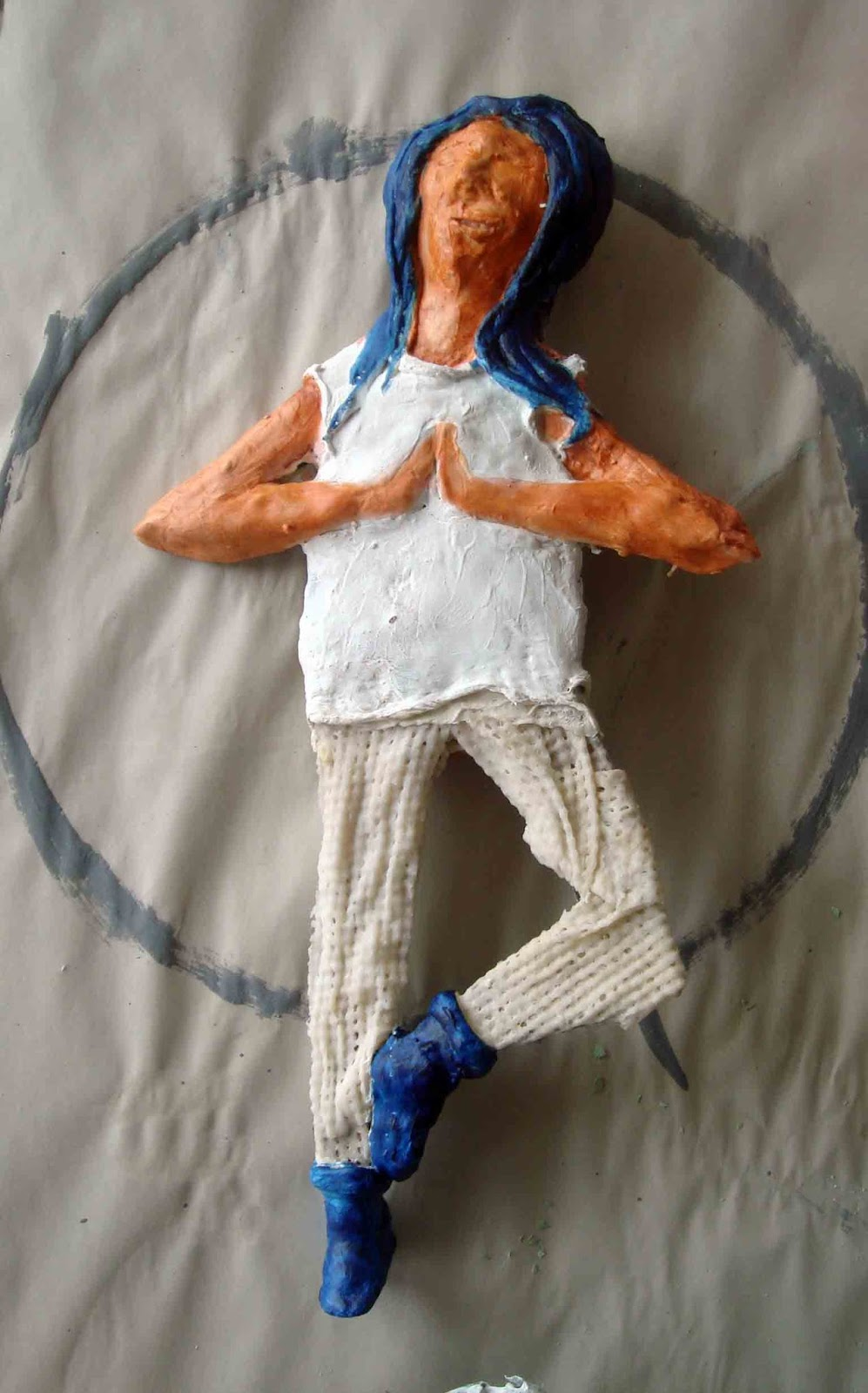
Crone of the Blue Ugg Boots.

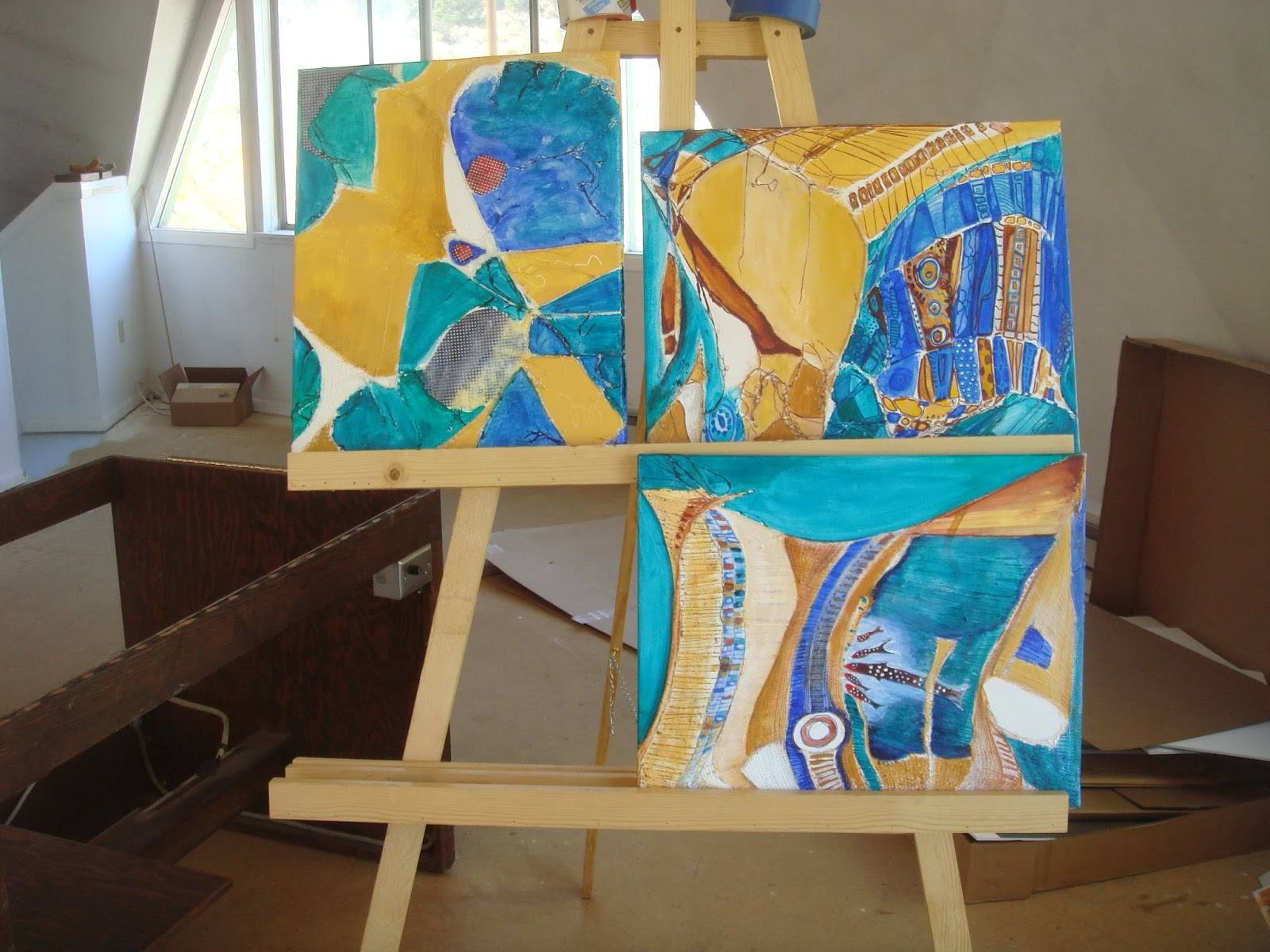
Triptych


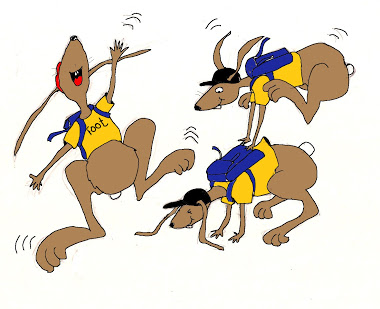
Illustration:  The Brothers Foot and the Rabbit Proof Fence

Thursday, January 7, 2016

Yerington Monday: Donkey Basketball

Yerington Monday: Donkey Basketball

Are they still playing Donkey Basketball in Yerington? Inquiring minds want to know if any of you have gone to a Donkey Basketball game. The only one I have attended was in Yerington as a teenager.

Donkey Basketball in Yerington

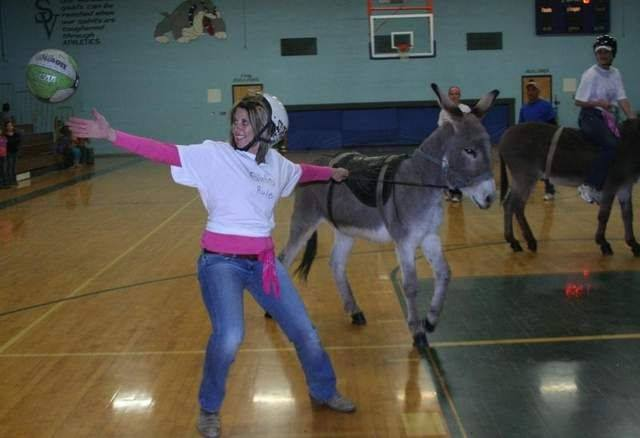
Smith Valley resident Felicia LaFleur tries to catch the ball while holding on to her donkey during a previous Donkey Basketball game at the Smith Valley Gym, sponsored by the Smith Valley FFA Chapter and Smith Valley FFA Alumni.

Smith Valley Donkey Game
Felicia LaFleur

Posted on Facebook Oct 13, 2014

Comments

  • Peggy Freitas Purintun That was it for me too. Where has all the fun gone?

  • Mary Westberg Is this for REAL????? LOL. LOL.

  • Chere Brown Yes, Mary it was for real and lots of fun to watch, although animal rights advocates were not pleased in later years and may have been successful in closing them down. They were great fund raisers.

  • Mary Westberg This must be a scream to watch!!!! I have never heard of it!!! Amazing.....just Amazing !!!!

  • Nikki Newell Bryan They have had games within the last few years. Fun!

  • Patti Chitwood Fielding They were so much fun!

  • Peggy Freitas Purintun My husband tells me that they also held them in Laramie when he was in high school.

Dawnette Kelley They had them here but that was a loooong time ago. I had forgotten all about that:-)

Yerington Monday: Dr. Mary Fulstone

Yerington Monday: Dr. Mary Fulstone

Many of us have very fond memories of Dr. Mary. Please feel free to share on this post.

Dr. Mary Hill Fulstone (August 3, 1892 - December, 1987) was an American physician. When she retired from practicing medicine at the age of 91, she was the longest-practicing physician in the state of Nevada. She was born in Eureka, and graduated from University of California, Berkeley (undergraduate and medical school). Known as "Dr. Mary", Fulstone was honored as Nevada's Mother of the Year (1950), Nevada's Doctor of the Year (1961), and Distinguished Nevadan (University of Nevada, 1964).

Doctor Mary had a government contract to care for the Indians. She was paid $90 per month to minister to the Indians in a wide-ranging area that took her out of the valley to Topaz, Coleville, Bridgeport, and Sweetwater. One major function was delivering their babies, but she also performed many other duties. Mary recalled one house call she made to a tepee near Bodie. The Indian man inside had stomach cancer, but his wife was sure that Mary could make him well. Mary could do nothing more than offer morphine for the man's pain. His wife's reaction had a long-term impact upon the doctor. She recalled, "I shall never forget the disappointment on her face, for her hopes had been high and her trust that something could be done was complete." Mary was never satisfied when her work could not produce a positive outcome.

During the depression of the 1920's-30's, cash was scarce for the farmers in the valley. Patients who could not afford to pay would trade animals or other farm products for Fulstone's services. The family also traded her fees for goods from the local merchants. Mary never refused treatment to anybody based upon their inability to pay. According to David's memory, she did not even begin formal billing until sometime during the 1950's.

Beginning about 1938, Mary began traveling three days a week to Yerington. She maintained her office hours in the morning in Smith Valley, and then made the twenty-five mile trip in the afternoon. Yerington had a shortage of doctors, and she soon had many new patients. She later established a permanent office on Main Street in one part of the home belonging to David and his wife, Angie. During the early 1950's, Mary began a crusade to get a new hospital built in Yerington. The old hospital was dilapidated and poorly equipped, and Mary disliked it intensely. In 1954, the voters passed the bond issue that would build a new hospital. One wing of the Lyon Health Center was later named the "Doctor Mary" in honor of the woman who had worked so hard to turn her dream into reality.


This photo was taken by my mom. Clara Barnett at the opening of the Dr. Mary Wing of the Lyon Health Center.


Fred and Mary Fulstone, Smith Valley Rancher and wife, doctor Mary Fulstone.


Book written about Dr. Mary by Dixie Westergard

Posted on Facebook Dec 22, 2014  

Some Comments
  • Sylvia Banta My favorite doctor of all time. She held my hand all night during the delivery of my son while we waited for the surgeons. My son was one of the last babies Dr. Mary delivered.

  • Tom Joyner She delivered all eight of the Joyner siblings. What a great lady!

  • Karen Dodd She was a great doctor, very compassionate, caring bedside manner and I dearly loved and trusted her! ! She delivered both my daughters, ages 45 and 46.

  • Jolene Rogers Hunt I thought for years that she was the meanest Doctor ever....when I was little I was helping feed the horses...unfortunately the pitch fork tongs lodged through the meat of my leg...after she removed the fork from my leg she had to give me a tetanus shot which hurt like heck....okay, I'm over it....RIP Dr. Mary...

  • Emily McKay Douglas The night I was born there was a power outage and the power came back on about 20 minutes before I was born. She remembered it and would talk to my dad about it. I am sure she remembered a lot about all the babies she delivered.

  • Liz Merrill Mason The night I was brought into the ER after the car accident with Jim Freeman they called Dr. Mary. My mom swore she had to have been doing 90 in the canyon to get there so quickly. Dr. Mary told my mom she was going to be her ER nurse because there were no nurses available. she kept yelling at my mom because she kept trying to pass out from the sight of all the blood. Dr. Mary had her pulling glass out of my face and the top of my head. She explained to my mom she was going to do plastic surgery on my face so there would be minimal scarring. I had hundreds of stitches and Dr Mary ordered that I not be allowed to have a mirror. I panicked. but she had done a beautiful job and the only scar I had was on my forehead running up through my hairline which was easily hidden with bangs. I had to spend months in bed because of my 3 broken vertebrae so she came to our house to see how I was doing and if I was keeping up with my school work. I really enjoyed those visits. She was awesome.

  • Timothy McGowan Chere Brown When naming Dr. Mary's birthplace, I presume you were referring to Eureka, Nevada?

  • Chere Brown Yes, Tim Dr. Mary was a true Nevadan. I think she went to high school in Carson City, where she met her husband, Fred, before he bought the ranch in Smith Valley. I think the only time she lived out of state was when she went to medical school in Berkeley, CA.

  • Mark Glass Ahhh, yes, Dr. (Sweetheart) Mary!! She delivered our first two children and took care of us until we moved to Fallon. She will always have that special spot in my heart.

  • Dawnette Kelley I must have been about 8 when I was really, really sick. I don't know for sure what it was but probably a bad bout of the flu.Dr. Mary came to our house in Weed Heights and gave me a shot. I remember that like it was yesterday:-)

  • Chere Brown Oh, the dreaded shot. The answer to everything in those days was penicillin. My mother sent me many times to Dr, Mary's office for a shot. I don't know what scared me most, the needle or having to drop my drawers and exposing my butt.

  • Chere Brown Dr. Mary & Fred were wonderful entertainers. We were invited many times to their ranch for Easter egg hunts, pheasant hunting, and Christmas parties. Us four children were awestruck and had so much fun. Of course we were forewarned before each event to be on our best behavior, so as not to embarrass our mother.

  • Peggy Freitas Purintun The amazing thing that just happened to me is that the second I saw this picture of Dr. Mary, I smelled alcohol. True story. It is amazing what the mind can conjure up.

  • Chere Brown When I was 8 years old, I spent two weeks in the Lyon Health Center with rheumatic fever. To this day when I see the light green color of the interior of the hospital (I always called it hospital green), I have flashbacks.

  • Jackie Chapman I think she was the doctor that delivered me.

  • Sylvia Banta Chere, one other memory Dr. Mary pierced my ears. Back then we went to the doctor to get our ears pierced. Kinda funny

  • Leota Joyner Johnson She was such a precious lady, delivered all eight of us Joyner kids and both of mine. No one like her!

  • Leota Joyner Johnson I can remember hiding under the bed on one of her house calls. She gave a mean shot of penicillin.

  • Chere Brown My mother, Clara Barnett, told me a story about her and Dr. Mary that surprised me. Before birth control, she told of a lady who had gotten pregnant through an affair. Apparently her husband was a very, very jealous & mean man, which everyone knew. She managed to hid the pregnancy because she was over weight, but knew she couldn't bring the baby home, because her husband would literally kill her. My mother assisted Dr. Mary with the birth and then they took it to the nuns at St. Mary's hospital in Reno. That was bad enough, but the woman got pregnant again under the same circumstance a few years later. Again, my mother & Dr. Mary delivered the child & took it to St. Mary's, but this time they threatened her that if it happened again they would not help her and she would be in the hands of her husband. It never happened again.

  • Mary Burns Wow , "Chair" quite a story ! I too was delivered by Dr Mary . she once made a house call to our home for bro JOe. He locked himself in the bathroom, and she was looking for a ladder to flush him out. JOe heard that , came running out ,into Dr Marys arms ... and her famous 'shot' I still recall Dr Mary boiling her needles on our stove and I have been in medicine since 1972 and the days of house calls are pertneer gone and the days of grabbing a ladder to get a kid from a bathroom probably never even existed , except in Yerington with Dr Mary.

  • Chere Brown I love that story about Joe. I remember my mother boiling needle on our stove to give all of us kids shots. It was a scary sight. I was so afraid of needles and would run and hid in the bathroom and cry for the other kids.

  • Gar Johnston So many stories can be told. She gave my brother a tetanus shot, after being taken to town from having a pitchfork stuck in his leg. I won't say how it got there to begin with... However, proper foot placement and a good yank removed it.

  • Peggy Freitas Purintun needles were a whole different story when we were growing up compared to the needles used now. There was a reason we were all scared.

  • Jolene Moyer She delivered my oldest son, he is 47. She was mad at Dr. Beam because he was going on vacation and was inducting labor on a lot of his ladies. He didn't think she would be at the hospital or find out. So I paid for it----- castor oil and any other natural remedy she could think of !

  • Chere Brown Very interesting, Jolene. Jackie was wondering if Dr. Mary had delivered her as well. Or was it Dr. Beam?

  • Jolene Moyer Jackie was delivered by Dr. Beam. Dr. Mary is listed in the book "Who’s Who in America" and what about her twin daughters being the Toni Twins for Toni home permanents ?

  • Chere Brown Those are great points, Jolene. One of the twins married a man who owned Heavenly Valley Ski Resort. In the winter of 1967, I worked for them and lived in Dr. Mary's cabin in Zephyr Cove, Lake Tahoe. Never been so cold in my life.

  • Karen Edge The Lyon County Museum has been compiling a list of 'Dr. Mary's Babies' -- all the babies she delivered over the years. Don't know what will be done with the list -- a plaque or just a publication? If you're a Dr. Mary baby you might want to get your name added.

  • Peggy Freitas Purintun I SO wanted to be a Dr. Mary baby, but just checked my birth certificate, and the attending physician was Dr. Tebbe

Mary Burns Dr Mary's granddaughter, DeeAnn FUlstone , class of 67, now lives in Dr Marys Zephyr Cove 'cabin' full time Dee Ann has fixed it up , but I hear she still has fire stove heat. and Dee Ann drives to Reno for work.
Related Posts Plugin for WordPress, Blogger...